

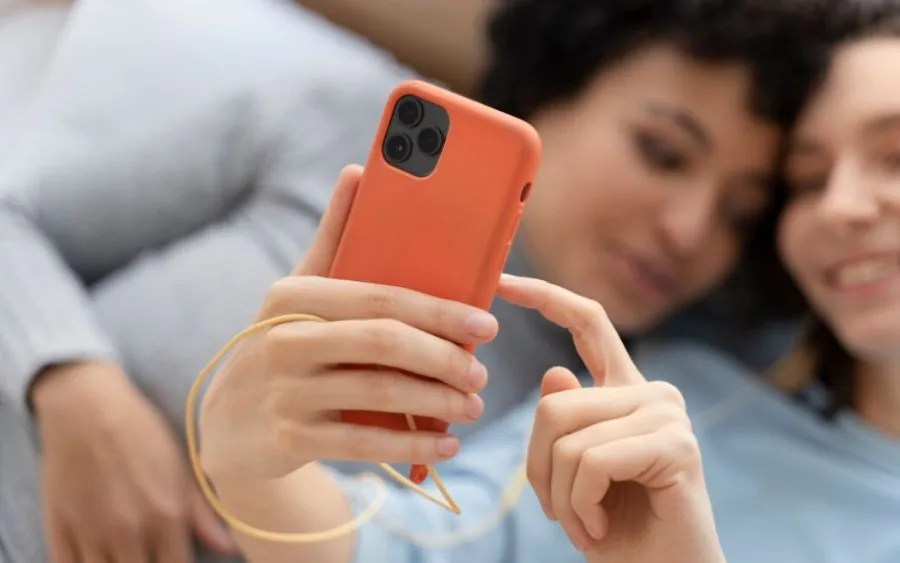
phone case for this phone
To find the right phone case for this phone, confirm the exact model number, check the camera and button layout, choose a protection level that matches your routine, and verify charging compatibility. A well-fitted case protects the corners, frame and back without blocking ports, cameras or wireless charging.
A case that looks almost correct can still be the wrong case. Apple’s official identification guide separates devices by model number, release year and region, showing why visual similarity alone is not reliable for compatibility (Apple, 2026). For a mobile store, wholesaler or distributor, accurate matching reduces returns and turns a basic accessory sale into a more trusted customer experience.
The commercial opportunity is significant. Worldwide smartphone shipments were forecast at approximately 1.24 billion units in 2024, creating continuous demand for protection, charging and personalization accessories (IDC, 2024). The question is not whether customers need cases; it is how your business helps them choose correctly.
How do you find the right phone case for this phone?
For shoppers, the question phone case for this phone should always lead to exact model verification before style or price is discussed.
Start with the device identity, not the color or approximate size. When a customer asks for a phone case for this phone, the salesperson should confirm the brand, exact model, generation and, when necessary, regional model number before recommending any product.
This matters because smartphones with similar names may have different dimensions or camera modules. Apple, for example, identifies the iPhone 17e with three regional model-number groups, demonstrating that precise identification is part of responsible accessory matching (Apple, 2026).
Use this five-step compatibility check
- Open the device settings. Find the full model name and model number.
- Inspect the camera island. Count the lenses and note their arrangement.
- Check the controls. Compare the position of volume keys, power key and any action button.
- Verify the ports and speakers. The openings should align without forcing the case.
- Read the case compatibility label. Confirm that the exact model is listed by the manufacturer.
Do not assume that two phones with the same screen size can share a case. A difference of only a few millimeters can affect corner retention, camera clearance and button response. Apple’s support documentation organizes iPhone models by distinct hardware details rather than by display size alone (Apple, 2026).
Why does exact case compatibility matter?
A reliable answer to phone case for this phone begins with compatibility and ends with a case that remains secure during daily use.
Exact compatibility affects protection, usability and customer satisfaction. A case that is too loose may separate from the phone during impact, while an overly tight case can press buttons, distort the frame or make removal difficult.
Drop risk is not theoretical. A global study reported that more than 85% of smartphone owners dropped their phone at least once per year, and 55% dropped it three times or more (Corning, 2016). A protective accessory must remain attached and correctly aligned when that moment occurs.
When someone searches for a phone case for this phone, they usually want a fast yes-or-no answer. Retailers should provide that answer using a compatibility process, not guesswork.
Signs that a case fits correctly
- The corners are fully seated without visible gaps.
- The case does not move when the phone is gently twisted.
- Buttons remain responsive and are not permanently pressed.
- The camera opening does not cover lenses or flash elements.
- The charging port and speakers remain unobstructed.
- The raised screen edge does not lift the screen protector.
- Wireless charging works as intended when the case claims compatibility.
Corning found that more than 60% of smartphone owners in its study had dropped devices from between shoulder and waist height (Corning, 2016). Correct corner retention and raised edges are therefore practical design features, not decorative details.
What level of protection do you need?
The protection needed from a phone case for this phone changes according to work conditions, travel habits and drop exposure.
The best case is not automatically the thickest one. The right level depends on where the phone is used, how often it is handled, and whether the owner values slimness, grip, style or maximum impact protection.
Consumers are keeping phones longer. Counterpoint Research reported that the global smartphone replacement cycle reached 43.4 months in 2023 (Counterpoint Research, 2025). Longer ownership gives buyers a stronger reason to protect a device against repeated daily wear.
| Protection level | Typical construction | Best for | Main trade-off |
|---|---|---|---|
| Light | Thin TPU, silicone or slim rigid shell | Careful users who prioritize low bulk | Less impact cushioning |
| Balanced | TPU bumper with rigid back | Most daily users | Moderate added thickness |
| Rugged | Multi-layer shell with reinforced corners | Outdoor work, travel and higher drop risk | More weight and bulk |
| Premium slim | Composite, aramid-style or engineered thin material | Users seeking low bulk and refined finish | Higher price and model-specific availability |
For most customers asking for a phone case for this phone, a balanced hybrid case is the safest default recommendation. It provides better structure than a very soft shell while remaining easier to carry than a heavy-duty rugged design.
Which phone case material is best?
Material selection matters because a phone case for this phone must balance grip, impact management, thickness and long-term appearance.
No single material wins every category. The best choice depends on impact absorption, rigidity, grip, appearance, yellowing resistance, wireless charging and target price.
Smartphone cover glass itself is engineered for drop performance, yet it still has defined test limits. Gorilla Glass 5 survived face-down laboratory drops from 1.6 meters up to 80% of the time under Corning’s test conditions (Corning, 2016). A case adds another protective layer, especially around exposed edges and corners.
TPU cases
Thermoplastic polyurethane, usually called TPU, is flexible, impact-absorbing and relatively easy to install. It is widely used for clear cases, bumpers and hybrid frames because it can cushion everyday drops while maintaining a close fit.
TPU is a practical answer when a shopper requests a phone case for this phone at an accessible price. Retailers should still check material thickness, corner design and long-term discoloration because quality varies.
Silicone cases
Silicone offers a soft touch and strong grip, which can reduce accidental slips. It works well for customers who dislike hard plastic and want a comfortable everyday case.
However, some silicone finishes collect lint or wear at high-contact points. The recommendation should be based on the actual product construction rather than the word “silicone” alone.
Polycarbonate cases
Polycarbonate is rigid and helps a case maintain its shape. It is commonly used for transparent backs, printed designs and the outer shells of rugged cases.
Corning reported that Gorilla Glass 6 survived an average of 15 drops from one meter onto rough surfaces in laboratory testing, illustrating how repeated impacts are a meaningful durability challenge (Corning, 2018). A rigid shell combined with a flexible bumper can help manage repeated everyday stress around the device body.
Hybrid cases
Hybrid cases combine materials to balance cushioning and structure. A common configuration uses a flexible TPU edge with a transparent or colored polycarbonate back.
For retailers, hybrid designs are easy to explain: the softer frame helps absorb impact, while the rigid back maintains shape. They are often the most versatile option for a customer asking for a phone case for this phone.
Premium composites and specialty materials
Premium cases may use aramid-style fibers, reinforced composites, metal accents or engineered multilayer constructions. These products can support higher perceived value, but the retailer must explain what the customer is paying for.
IDC estimated that generative-AI smartphone shipments would reach 234.2 million units in 2024, reflecting the growing number of advanced and often higher-value devices entering the market (IDC, 2024). Premium phone ownership can support demand for better-designed accessories.
How do cases protect a phone during a drop?
During a fall, a phone case for this phone is most useful when its corners stay attached and its raised edges separate glass from the surface.
A protective case manages energy and reduces direct contact between the phone and the surface. Its corners, edges and material structure can deform or distribute force before it reaches the glass and internal components.
Impact angle matters. A flat, controlled laboratory drop is different from a phone striking a stair edge, rock or metal object. Corning’s Gorilla Glass Victus 2 survived laboratory drops up to one meter on surfaces replicating concrete, but laboratory results do not guarantee survival in every real-world event (Corning, 2022).
This is why selecting a phone case for this phone requires more than checking whether it covers the back. You should inspect corner reinforcement, screen lip, camera protection and the stability of the fit.
“With many real-world drops occurring from between waist and shoulder height, we knew improving drop performance would be an important and necessary advancement.”
John Bayne, then Vice President and General Manager of Corning Gorilla Glass (Corning, 2016)
Protection features worth checking
- Reinforced corners: extra material at common impact points.
- Raised screen lip: separation between the display and a flat surface.
- Raised camera ring: reduced direct contact around camera lenses.
- Internal cushioning: patterns or layers designed to manage impact.
- Secure sidewalls: enough retention to keep the phone inside the case.
- Grip texture: a surface that can reduce drops before they happen.
Corning’s 2024 Gorilla Glass 7i testing reported survival from drops up to one meter on surfaces replicating asphalt (Corning, 2024). The result reinforces a simple retail message: the surface, height and angle of a drop all influence protection outcomes.
Should a phone case be combined with a screen protector?
A complete recommendation pairs a phone case for this phone with screen protection that does not lift or conflict with the case lip.
Yes. A case and screen protector address different exposure points. The case protects the frame, corners and back, while the screen protector helps with scratches and some direct contact on the display.
Corning’s global study found that smartphone drops are frequent, with 85% of owners reporting at least one drop annually (Corning, 2016). Combining accessories provides broader coverage than relying on either product alone.
When recommending a phone case for this phone, check whether the case edge is compatible with the installed screen protector. An overly tight lip can lift the film or create bubbles near the corners.
Devia Global offers both phone case and screen protection categories, allowing stores to build a coordinated protection offer. Retailers can learn more about stronger display coverage in the guide to an ultra-resistance screen protector.
A practical three-product protection bundle
- A properly fitted phone case for the exact device model.
- A screen protector selected for the display shape and customer preference.
- A camera-lens protector when it is compatible and does not affect image quality.
Gorilla Glass 5 had already been used on more than 4.5 billion devices across over 1,800 product models and 40 major brands when Corning introduced the generation in 2016 (Corning, 2016). That breadth helps explain why accessory businesses need disciplined compatibility management.
How should retailers answer “Do you have a phone case for this phone?”
When staff hear phone case for this phone, they should follow the same identification and demonstration process every time.
The strongest response is not “probably.” It is a short diagnostic process that gives the customer confidence.
Global smartphone shipments totaled 293.8 million units in the first quarter of 2026, with many brands and models competing across markets (IDC, 2026). This variety makes model identification a core retail skill.
Recommended in-store conversation
- Identify: “Let me confirm your exact phone model.”
- Understand: “Do you prefer slim design, clear style, magnetic charging or stronger drop protection?”
- Compare: Show two or three clearly different options.
- Demonstrate: Check buttons, grip, camera lip and charging compatibility.
- Complete: Offer screen and lens protection as relevant additions.
This approach transforms the phrase phone case for this phone from a product-location question into a guided sale. The customer receives a clearer recommendation, and the store has a natural opportunity to increase average order value.
What should wholesalers and distributors stock?
For a wholesaler, demand for phone case for this phone must be converted into model-level sales data rather than broad assumptions.
Wholesalers should not distribute equal quantities of every color, style and model. They should build an assortment around local device demand, retailer type, price tier and reorder speed.
Counterpoint Research forecast global smartphone shipments of about 1.23 billion units for 2024, with growth led partly by emerging markets (Counterpoint Research, 2024). Regional demand matters because the device mix in Latin America can differ from Europe, North America, Asia or the Middle East.
| Assortment group | Purpose | Recommended role | Inventory approach |
|---|---|---|---|
| Clear cases | Show the original phone design | Core volume category | Deep stock for top models |
| Slim TPU cases | Affordable everyday protection | Entry-level option | Broad model coverage |
| Hybrid protective cases | Balanced impact protection | Main recommended tier | Prioritize proven colors |
| Magnetic-compatible cases | Charging and accessory ecosystem | Premium functional tier | Focus on compatible models |
| Rugged cases | Higher-risk use | Specialist protection tier | Selective depth |
| Fashion and seasonal designs | Personalization | Traffic and impulse category | Small test orders first |
Devia Global’s official catalog includes dedicated iPhone and Samsung case categories as well as selected tablet protection products, illustrating a multi-device accessory strategy (Devia Global, 2026). The company also supports wholesalers, importers and retail networks through its broader mobile accessory ecosystem.
For a broader distribution strategy, see the Devia Global guide for a mobile accessories wholesaler.
How can stores reduce returns and dead inventory?
Inventory planning for phone case for this phone should distinguish core models, long-tail devices, colors and protection tiers.
Returns usually come from incorrect model matching, unclear labeling, poor fit, unmet material expectations or charging incompatibility. Dead inventory grows when buyers order too deeply before validating local demand.
The global smartphone replacement cycle reached 43.4 months in 2023, meaning older models can remain active for years while new ones enter the channel (Counterpoint Research, 2025). Retailers therefore need both current-launch products and a controlled long-tail strategy.
Seven inventory actions
- Use exact model names and model numbers on every shelf label.
- Separate visually similar devices into different bins.
- Track weekly sell-through by model, case type and color.
- Reorder proven combinations instead of equal quantities.
- Test fashion designs in smaller quantities.
- Keep photos of camera layouts in the sales system.
- Ask retailers for lost-sale and missing-model reports.
A customer may phrase the request as phone case for this phone, but your inventory system should translate that request into structured data. Model, material, color, protection level and price tier should all be recorded.
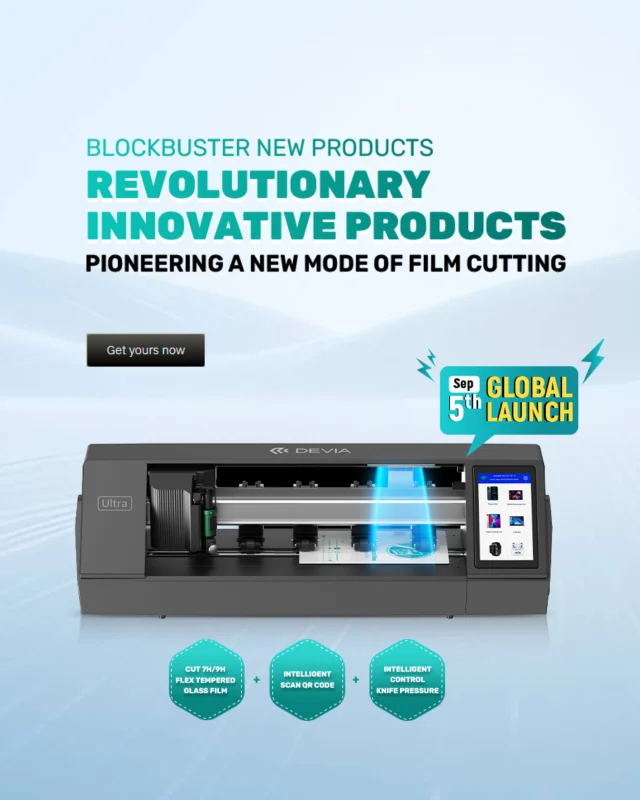
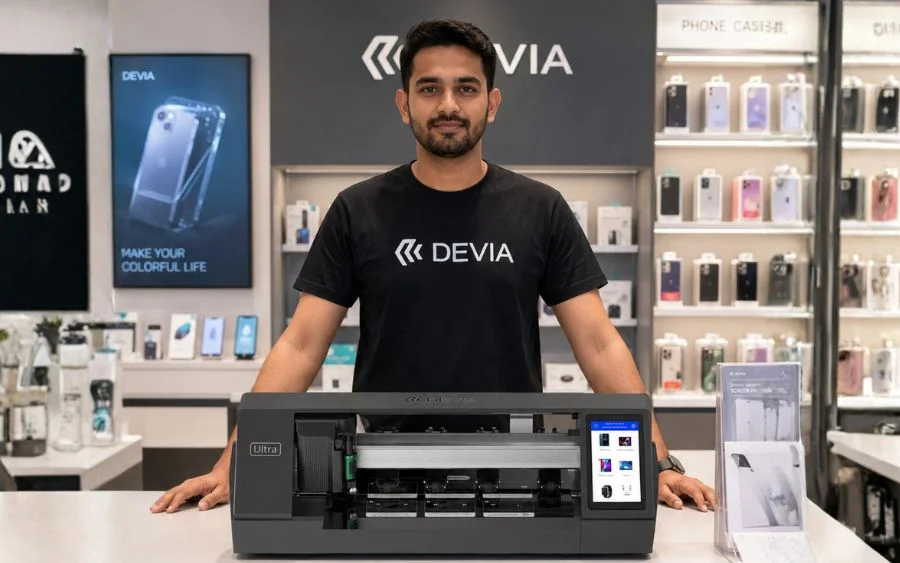
Businesses expanding into screen-protection services can also review the reasons distributors are switching to automated film cutting. Cases and on-demand films can complement each other without requiring the same inventory model.
How do magnetic charging and accessories affect case choice?
Charging behavior can change the correct answer to phone case for this phone, especially when magnetic mounts and wireless chargers are used.
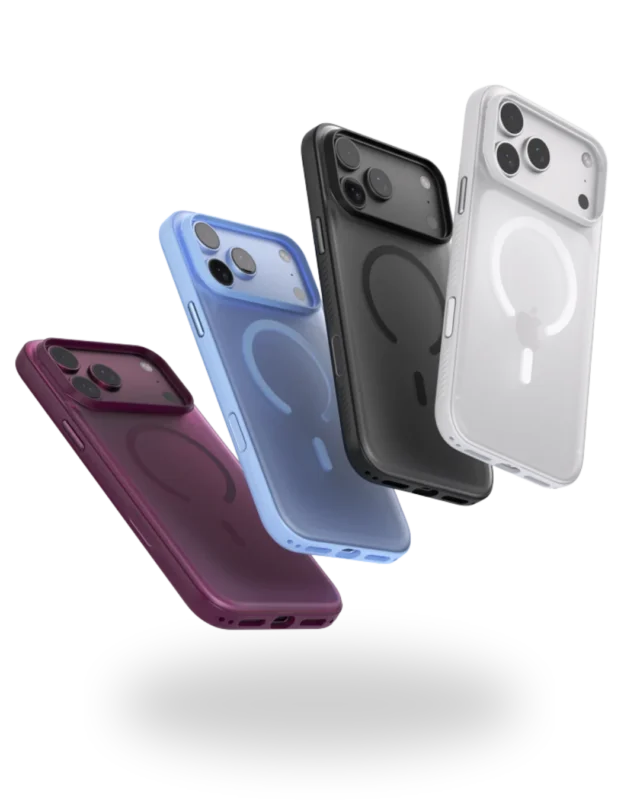
A case can fit physically and still be wrong for the customer’s accessory ecosystem. Magnetic alignment, thickness and material can affect wireless charging, magnetic mounts and attachable wallets.
IDC projected that the smartphone market would increasingly move toward higher average selling prices as manufacturers shifted toward higher-value product mixes (IDC, 2026). Customers investing in premium devices often expect cases to work smoothly with premium charging and mounting accessories.
Before selling a phone case for this phone, ask whether the customer uses wireless charging, a magnetic car holder, a wallet attachment or a desktop stand. Then verify that the case explicitly supports that use.
Compatibility questions for the counter
- Does the customer use wireless charging every day?
- Is a magnetic ring built into the case?
- Does the customer use a vehicle mount?
- Will a pop grip, wallet or stand be attached?
- Does the camera ring interfere with a charging stand?
- Is the case too thick for the intended accessory?
In Q1 2026, Apple accounted for 61.8 million smartphone shipments in IDC’s preliminary market data, representing 21.0% of the quarter’s global volume (IDC, 2026). For retailers serving Apple users, magnetic compatibility deserves a clear position in the assortment.
Which phone case should you recommend by customer profile?
Customer lifestyle gives context to phone case for this phone and helps the retailer choose between slim, hybrid and rugged constructions.
Recommendation becomes easier when you match the case to behavior rather than only to appearance. Two customers with the same phone may need completely different products.
| Customer profile | Recommended case | Reason |
|---|---|---|
| Minimalist user | Slim TPU or premium thin case | Low bulk and comfortable pocket use |
| Frequent traveler | Hybrid case with grip and raised edges | Balanced protection in changing environments |
| Outdoor worker | Rugged multi-layer case | Higher exposure to drops and rough surfaces |
| Style-focused buyer | Clear, printed or fashion case | Personalization and visual appeal |
| Driver | Magnetic-compatible case | Better integration with vehicle mounts |
| Premium-device owner | High-quality hybrid or composite case | Refined fit and stronger value perception |
Corning’s Gorilla Glass 7i delivered up to twice the scratch threshold of competitive lithium-aluminosilicate glass in the company’s laboratory testing (Corning, 2024). Even as device materials improve, the case recommendation remains relevant because frames, corners, camera modules and back panels still face daily wear.
When the shopper asks for a phone case for this phone, presenting two contrasting choices is usually more effective than showing ten similar cases. One can prioritize slimness; the other can prioritize protection.
What is the practical recommendation for buyers?
The final decision on phone case for this phone should be based on verified fit, useful features and realistic protection expectations.
Confirm the model first, then choose protection level and compatibility features. Do not buy solely from a product photo or approximate device name.
More than 1.2 billion smartphones move through the global market in a typical recent year, creating a fragmented accessory landscape with many model-specific requirements (IDC, 2024). The correct process protects the buyer and the seller.
Final buyer checklist
- Exact phone brand and model confirmed
- Camera and button openings aligned
- Case edges securely retain the device
- Protection level matches the user’s routine
- Material and grip meet expectations
- Screen protector remains compatible
- Wireless or magnetic charging is verified
- Warranty and return conditions are understood
For stores, the phrase phone case for this phone should trigger a repeatable sales process. For wholesalers and distributors, it should trigger accurate catalog data, structured inventory and retailer education.
How should teams operationalize case matching?
A repeatable process for phone case for this phone should begin with model confirmation and end with a documented sale.
Sales teams can resolve phone case for this phone faster when product bins, labels and digital catalogs use the same naming standard.
Warehouse teams should connect every phone case for this phone SKU to brand, model, generation, material, color and protection tier.
E-commerce teams can improve phone case for this phone pages by adding model filters, camera-layout images and charging-compatibility notes.
Store managers should review phone case for this phone requests that did not convert, because missing models reveal assortment gaps.
Distributors can make phone case for this phone easier to sell by supplying comparison charts, staff training and clear product claims.
Buyers should test each phone case for this phone sample on the actual device before placing a large wholesale order.
A strong phone case for this phone program combines accurate fit, relevant design, dependable supply and complete protection bundles.
Verified market and durability data
| Data point | Why it matters for case sellers |
|---|---|
| Worldwide smartphone shipments were forecast at 1.24 billion units in 2024 (IDC, 2024). | The installed accessory opportunity remains global and high-volume. |
| Global smartphone shipments reached 293.8 million units in Q1 2026 (IDC, 2026). | Retailers must manage frequent model and generation changes. |
| The Q1 2026 smartphone market declined 2.9% year over year (IDC, 2026). | Accessory sellers need stronger inventory discipline when device markets slow. |
| Apple shipped 61.8 million smartphones in Q1 2026 (IDC, 2026). | High-volume ecosystems justify dedicated compatibility planning. |
| Apple represented 21.0% of global Q1 2026 smartphone shipments (IDC, 2026). | Magnetic and model-specific accessories remain strategically important. |
| The global replacement cycle reached 43.4 months in 2023 (Counterpoint Research, 2025). | Longer ownership increases the value of durable cases and replacement accessories. |
| More than 85% of owners in Corning’s study dropped a phone at least once annually (Corning, 2016). | Drop protection addresses a common real-world event. |
| About 55% of owners reported three or more annual drops (Corning, 2016). | Cases should be positioned for repeated everyday exposure. |
| More than 60% reported drops between shoulder and waist height (Corning, 2016). | Corner retention and raised edges deserve clear product explanations. |
| Gorilla Glass 6 survived an average of 15 one-meter drops in Corning lab tests (Corning, 2018). | Repeated-drop performance is a useful concept when explaining protective systems. |
Final retail note
The search for phone case for this phone should always end with a verified fit, not an assumption based on appearance.
For B2B teams, every phone case for this phone request is also useful demand data for future purchasing and merchandising decisions.
Frequently asked questions about phone cases
Clear packaging makes phone case for this phone easier to answer because model names and generations can be confirmed at a glance.
How do I know which phone case fits my phone?
Start by identifying the exact brand, model name, generation and regional model number of your device. Do not rely only on screen size or a similar product name, because camera islands, button positions and body dimensions can differ. On an iPhone, you can confirm the model in Settings or use Apple’s official model-identification guide. Then compare that information with the compatibility list printed on the case packaging or product page before buying.
Can I use a case made for a similar phone model?
Usually, you should not use a case made for a similar model unless the manufacturer explicitly lists both devices as compatible. Small differences in camera modules, side buttons, speakers, charging ports and dimensions can create a poor fit. A loose case may come off during a drop, while a tight case can press buttons or interfere with accessories. For retailers, checking the exact model before opening the package helps reduce returns and improves customer trust.
What phone case material offers the best protection?
A hybrid design that combines a flexible TPU frame with a rigid polycarbonate back is a strong all-around option for many users. TPU helps absorb everyday impacts and improves grip, while polycarbonate helps maintain structure. Silicone can feel comfortable and grippy, and aramid-fiber or premium composite cases can offer strength with lower bulk. The best material still depends on drop risk, lifestyle, desired thickness, wireless charging and price.
Should I use a screen protector with a phone case?
Yes. A case and a screen protector protect different vulnerable areas and work best as a combined system. The case mainly protects the frame, corners and back, while a screen protector helps reduce scratches and some direct screen impacts. Neither accessory makes a device indestructible, but together they provide broader everyday protection. Mobile stores can also create a clearer recommendation by offering a case, screen protector and camera-lens protector as one bundle.
What phone cases should wholesalers and distributors stock?
Wholesalers should build a tiered assortment around proven device demand rather than buying every style in equal volume. A practical mix includes clear cases, slim TPU cases, magnetic-compatible cases, rugged protective cases and selected premium designs. Stock depth should follow local sell-through data, device launches and retailer feedback. Distributors should also provide compatibility charts, model labels, product images and merchandising materials so stores can identify and sell each case correctly.
How can mobile stores sell more phone cases?
Mobile stores can sell more cases by asking about the customer’s device, daily routine and protection priorities before recommending a product. Show two or three clearly different options instead of presenting an overwhelming wall of similar cases. Demonstrate fit, grip, camera clearance and charging compatibility, then offer a bundle with screen and lens protection. Tracking sales by model, material and price tier also helps the store reorder winners and reduce slow-moving inventory.
Read Also
Retail displays should organize phone case for this phone by device family first and by style or color second.
- How an ultra-resistance screen protector supports complete phone protection
- How to build a stronger mobile accessories wholesale portfolio
How can Devia Global support your phone case business?
Online product pages should answer phone case for this phone with searchable compatibility fields, accurate photos and precise model lists.
Choosing a phone case for this phone starts with compatibility, but a successful product strategy goes further. Retailers need clear model identification, relevant materials, well-defined protection tiers and bundles that make sense to customers.
Wholesalers and distributors need reliable catalog organization, consistent product positioning and an assortment built around real market demand. Devia Global operates across phone cases, screen protection, cutting plotters, chargers, cables, power banks, audio products and other mobile accessories for international B2B markets.
Explore Devia Global phone cases and mobile accessory solutions to develop a stronger product offering for mobile stores, wholesale buyers and distribution networks.
Sources
A store can increase conversion when phone case for this phone leads to a focused comparison of two or three relevant options.
- Apple Support: Identify your iPhone model (Apple, 2026)
- Corning Gorilla Glass 5 (Corning, 2016)
- Corning Gorilla Glass 6 (Corning, 2018)
- IDC Smartphone Market Insights (IDC, 2026)
About Alexandre di Mello
View all posts by Alexandre di MelloRelated posts
No More Naked iPhones: Hands-On Review of the comma Case, Screen Protector & Charger Trio
Variable Aperture Camera Accessories: comma’s Lens Protection Solution for the New iPhone
A20 Pro Performance Protection: Decoding comma’s Cooling and Protection Design Logic

Privacy Screen Filter for Monitor
Good Phone Case Brands

Computer Monitor Privacy Filter
Best phone case brands for the new iPhone 18
Why choosing the right phone case for this phone matters
Screen cracked with screen protector
Upholding a commitment to quality and fulfilling its mission, Comma cultivates the real economy with craftsmanship.
Setting Sail Anew in 2026 | DEVIA Enters into a Deep Strategic Partnership with Huawei to Jointly Build a High-Quality
Top 5 Reasons Why Distributors Are Switching to Automated Film Cutting


CATEGORIES