Screen Protection Solutions for Retailers
Answer Capsule: Screen Protection Solutions for Retailers help stores, distributors, wholesalers, and importers sell more phone accessories by combining hydrogel films, EPU films, tempered glass, cutting plotters, installation tools, and recurring supply. The goal is simple: protect more devices, reduce inventory risk, and increase profit per customer visit.
Global smartphone shipments reached approximately 1.24 billion units in 2024, which keeps screen protection as one of the most consistent accessory categories in mobile retail (IDC, 2025). For distributors and retailers, that demand creates a clear opportunity to build a profitable protection ecosystem instead of selling isolated products.
Screen Protection Solutions for Retailers are not just about placing a film on a phone. They are about creating a repeatable business model for stores that need speed, variety, quality, and better margins.
Why Do Screen Protection Solutions for Retailers Matter Today?
Screen Protection Solutions for Retailers matter because mobile devices are expensive, fragile, and constantly changing. Apple generated more than $200 billion in iPhone revenue in fiscal year 2024, showing how central premium smartphones remain in consumer spending (Apple Annual Report, 2024).
When consumers invest in expensive devices, protection becomes an easy and logical add-on. A customer may hesitate before buying another accessory, but screen protection feels practical, immediate, and necessary.
For retailers, this category has three advantages. It is easy to explain, easy to demonstrate, and easy to bundle with other products.
For distributors, the opportunity is even bigger. A complete protection solution can be sold to hundreds or thousands of stores, creating recurring demand for films, tools, replacement materials, and technical support.
What Should Complete Screen Protection Solutions for Retailers Include?
Complete Screen Protection Solutions for Retailers should include products, equipment, process, training, and replenishment. The global mobile accessories market continues to expand as users spend more on cases, chargers, cables, audio, power banks, and protection products (Grand View Research, 2024).
A retailer that only sells one type of screen protector limits its own revenue. A retailer that offers a complete protection menu can serve different customer needs and device types.
Core Components
- Hydrogel film for flexible and curved screen coverage
- EPU film for premium protection and improved durability
- Tempered glass for customers who prefer rigid protection
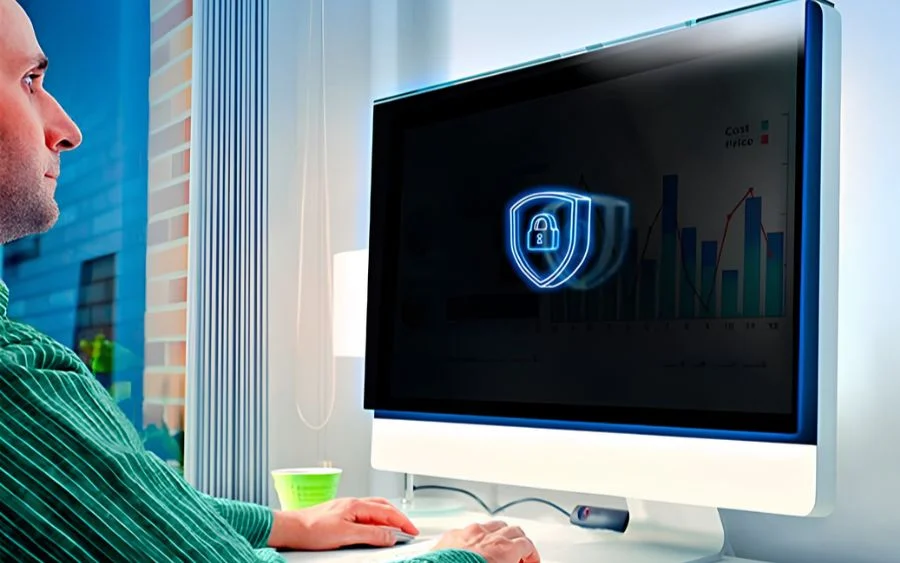
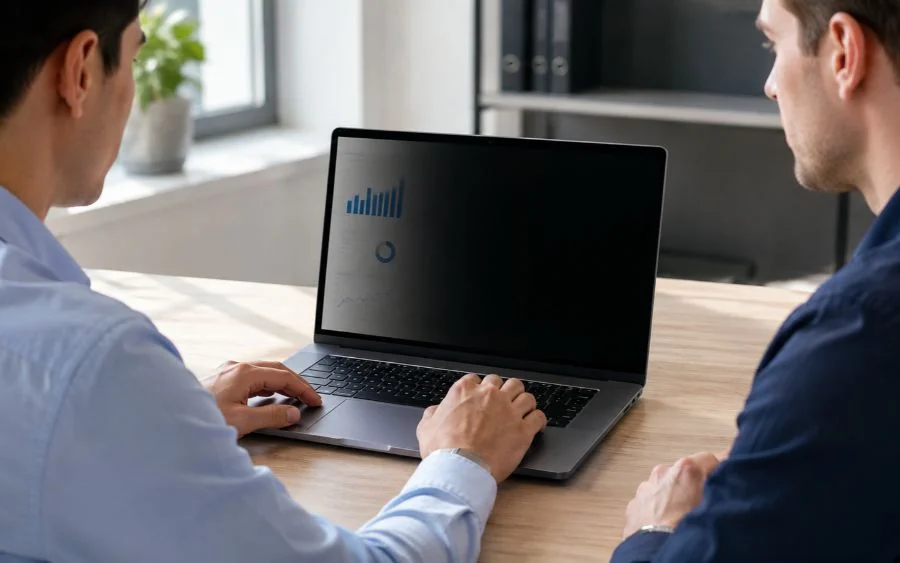
- Privacy film for users who want visual protection in public spaces
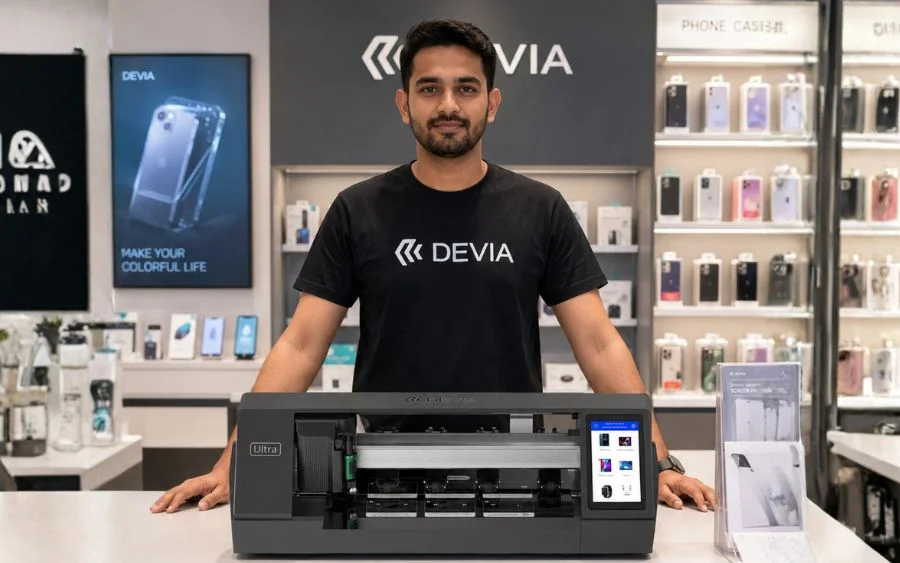
- Cutting plotter for on-demand film production
- Installation kits for cleaner application
- Retail display materials for faster customer education
- Staff training for upselling and installation quality
My Devia Global supports this model by combining product development, manufacturing, distribution support, and retail-oriented solutions for technology businesses worldwide.
How Can Screen Protection Solutions for Retailers Reduce Inventory Risk?
Screen Protection Solutions for Retailers reduce inventory risk because stores do not need to depend only on pre-cut models. Android powers thousands of active device models worldwide, which makes full inventory coverage difficult for traditional accessory stores (Statista, 2024).
Every new phone launch creates new SKUs. Every older phone model creates another inventory decision.
If a store stocks too little, it loses sales. If it stocks too much, it holds obsolete products that may never move.
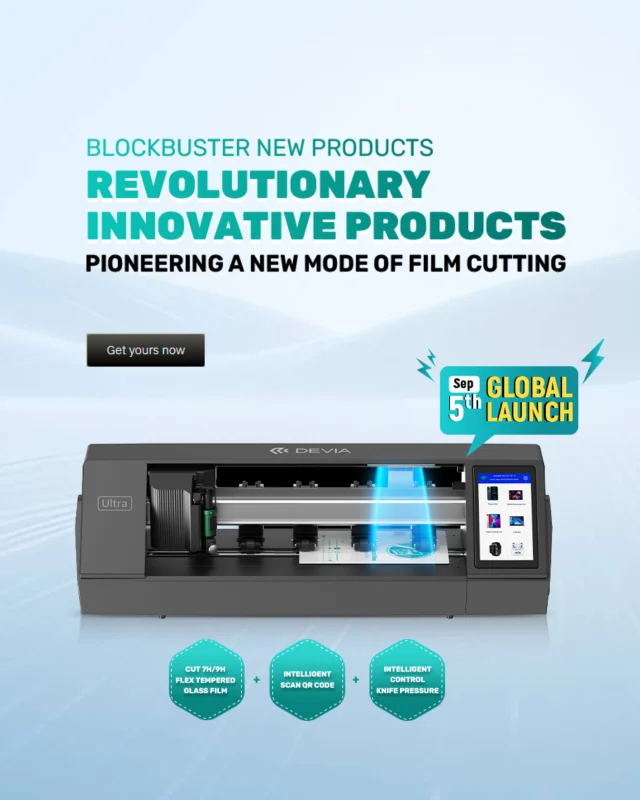
On-demand cutting changes this equation. A cutting plotter allows the retailer to produce screen protectors based on real customer demand rather than predictions.
Inventory Problems Solved
- Too many pre-cut models in stock
- Slow-moving protectors for older phones
- Missed sales for rare device models
- High cash tied to inventory
- Frequent updates after new launches
- Storage complexity inside small stores
This is why many distributors prefer a solution-based offer. The store receives a system that helps it sell more while holding less risky inventory.
Which Protection Type Should a Retailer Offer?
A strong retail strategy does not force one answer. It gives the customer the right option based on the device, usage, budget, and expectations.
Premium smartphones accounted for a growing share of global smartphone sales in 2024, showing that consumers increasingly buy higher-value devices that require better protection (Counterpoint Research, 2024). That means stores should offer more than a basic screen protector.
| Protection Type | Best For | Main Retail Advantage | Distributor Opportunity |
| Hydrogel Film | Curved screens, flexible devices, broad model coverage | Easy on-demand customization | Recurring film material sales |
| EPU Film | Premium customers who want durability and touch comfort | Higher perceived value | Premium consumable positioning |
| Tempered Glass | Customers who prefer rigid protection | Simple and familiar product | Mass-volume retail supply |
| Privacy Film | Professionals, commuters, travelers | Clear use-case selling | Niche product expansion |
Retailers that explain these differences sell with more confidence. Distributors that train stores on these differences improve adoption and repeat orders.
Why Are Hydrogel and EPU Films Important in Retail Protection?
Hydrogel and EPU films are important because modern devices are no longer limited to flat screens. Foldable smartphone shipments continued growing in 2024 as brands expanded flexible display portfolios (TrendForce, 2024).
Curved edges, thin bezels, and complex screen designs make traditional protection harder to manage. Flexible film materials give retailers a way to serve more devices with fewer limitations.
Hydrogel film is valued for flexibility, coverage, and compatibility. EPU film can offer improved durability, smooth touch, and a premium customer experience.
Retailers can learn more about material differences through My Devia Global’s article on what EPU film is and why it is more durable.
How Do Screen Protection Solutions for Retailers Increase Store Profit?
Screen Protection Solutions for Retailers increase profit by turning protection into a service, not only a product. The National Retail Federation reported that retailers continue to focus on margin protection, operational efficiency, and improved customer experience (NRF, 2024).
Professional screen protection creates a reason for customers to visit a physical store. The retailer can demonstrate the product, install it, and offer related items during the same visit.
That interaction opens the door to additional sales. A customer buying screen protection may also buy a case, charger, cable, cleaning kit, power bank, or camera lens protector.
Ways to Increase Average Ticket
- Bundle screen protection with a phone case
- Offer privacy film as a premium upgrade
- Add lens protection for smartphones with advanced cameras
- Create a protection package for new phones
- Offer installation as a value-added service
- Promote hydrogel replacement after a defined period
For a deeper retail strategy, My Devia Global explains how screen protection can boost store profits.
What Role Does a Cutting Plotter Play in Retail Growth?
A cutting plotter gives retailers speed and flexibility. The GSMA reported more than 5.8 billion unique mobile subscribers worldwide in 2024, showing the massive scale of device diversity that retailers must serve (GSMA, 2024).
No store can comfortably stock every screen protector for every phone, tablet, watch, and device variation. A plotter solves part of this challenge by making the store more adaptable.
The retailer selects the device model in the software, loads the film, and cuts the protection on demand. This turns one machine and a few material types into thousands of possible protection options.
Operational Benefits
- Serve more phone models immediately
- Reduce dependency on pre-cut inventory
- Respond faster to new device launches
- Sell protection for older models
- Improve customer satisfaction
- Create a visible in-store service
For distributors, the plotter is a strategic product because it creates long-term material consumption. The store does not only buy once. It keeps buying film materials as customer demand continues.
How Should Distributors Position Screen Protection Solutions for Retailers?
Distributors should position Screen Protection Solutions for Retailers as a complete profit system. B2B buyers do not only want products. They want products that move quickly, improve margins, and make business easier.
According to McKinsey, B2B buyers increasingly expect omnichannel experiences, clear product education, and value-based selling across digital and physical channels (McKinsey, 2024). That means distributors need to sell the business outcome, not only the catalog.
A strong distributor pitch should focus on revenue, inventory reduction, store differentiation, and repeat purchasing.
Recommended Distributor Pitch
- “Serve more customers without stocking hundreds of models.”
- “Turn screen protection into a high-margin service.”
- “Reduce obsolete inventory and increase recurring sales.”
- “Offer hydrogel, EPU, privacy, and premium protection options.”
- “Use one system to support smartphones, tablets, watches, and more.”
This message is simple and practical. It speaks directly to the retailer’s daily problems.
How Can Retailers Sell Screen Protection More Effectively?
Retailers sell more protection when they stop waiting for customers to ask. Many customers know they need protection, but they do not always understand the difference between basic, flexible, premium, and privacy options.
Accenture reported that consumers increasingly value personalized retail experiences and relevant recommendations during purchase decisions (Accenture, 2024). Screen protection fits this behavior because it can be recommended based on device use.
A customer who travels may need privacy film. A customer with a curved screen may need hydrogel. A customer who wants a smoother premium feel may prefer EPU film.
Simple Store Sales Process
- Ask what device the customer uses.
- Check if the screen is flat, curved, foldable, or heavily used.
- Explain two protection options in simple language.
- Show the difference using a sample or display.
- Offer professional installation.
- Bundle with case or charger when relevant.
This process helps employees sell without sounding aggressive. The goal is to guide the customer toward the right protection.
What Is the Best Business Model for Screen Protection Solutions for Retailers?
The best model combines product sales, service revenue, and recurring materials. Subscription and recurring revenue models are widely recognized for improving predictability and long-term business value (Deloitte, 2024).
In screen protection, the same logic applies. Retailers need constant film supply, tools, cleaning materials, replacement stock, and product updates.
Distributors can build a B2B program where stores buy the plotter, starter kit, film materials, and training. After that, the store continues ordering consumables.
| Revenue Layer | Retailer Benefit | Distributor Benefit |
| Equipment | Creates on-demand capability | Initial B2B sale |
| Film Materials | Supports daily sales | Recurring revenue |
| Training | Improves staff confidence | Higher store success rate |
| Marketing Support | Increases customer awareness | Stronger partner loyalty |
| Technical Support | Reduces operational friction | Long-term relationship |
My Devia Global’s business structure is aligned with this model because the company combines manufacturing, product development, sales, and operation support inside one international ecosystem.
What Makes My Devia Global a Strategic Partner?
My Devia Global is positioned as an international technology brand founded in 2007 and connected to the S&T Group, headquartered in Shenzhen, China. The company specializes in mobile accessories and complete retail solutions for technology businesses.
The global consumer electronics market remains one of the largest retail categories, with smartphones, wearables, charging products, and accessories continuing to drive replacement and upgrade cycles (Consumer Technology Association, 2024).
My Devia Global supports distributors, wholesalers, importers, retailers, and large technology chains by offering product quality, innovation, and scalable business models.
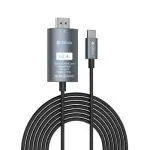
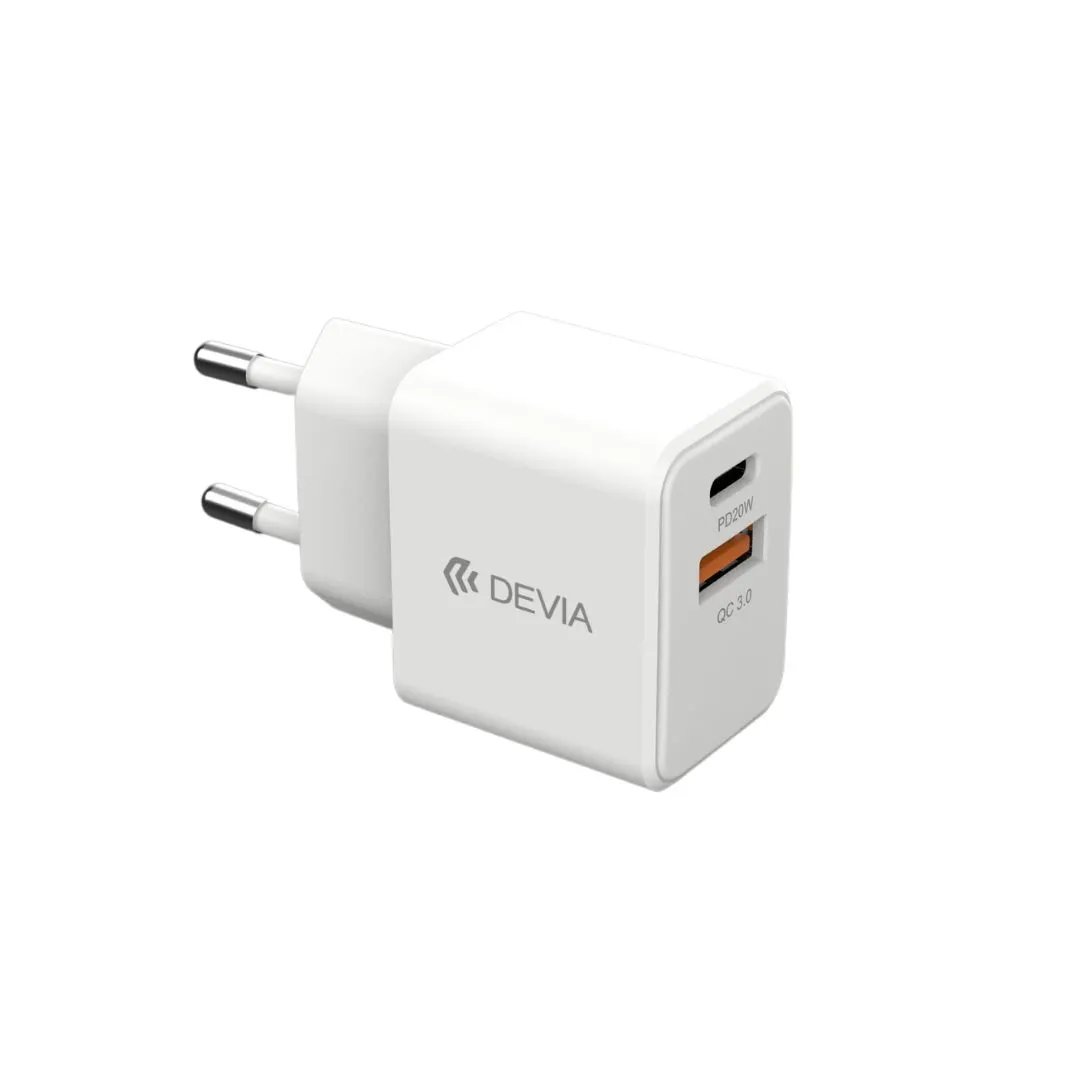
The company’s value for B2B partners is not limited to one product line. It offers a broader mobile accessories ecosystem that can include screen protection, cutting plotters, phone cases, chargers, cables, audio products, power banks, car mounts, and related solutions.
“Retailers win when screen protection becomes a guided service experience, not a passive product hanging on a shelf.”
Mobile Accessories Retail Strategy Perspective
How Should a Retailer Start With Screen Protection Solutions?
The most practical way to start is to build a focused protection station inside the store. Retailers do not need to redesign the entire business before selling better protection.
Shopper behavior research shows that clear in-store presentation and assisted selling can improve purchase confidence, especially for products that require explanation (NielsenIQ, 2024). Screen protection benefits from this because customers want to understand quality and installation.
Actionable Implementation Plan
- Create a small screen protection area near the counter.
- Display hydrogel, EPU, tempered glass, and privacy options.
- Train employees to explain protection in less than 30 seconds.
- Use a cutting plotter for broader device coverage.
- Offer professional installation as part of the purchase.
- Create bundles with cases, chargers, and cleaning kits.
- Track which film types sell best each week.
- Reorder materials based on consumption, not guesswork.
This plan gives the retailer a clear starting point. It also gives distributors a repeatable framework to onboard many stores.
How Do Screen Protection Solutions for Retailers Support Long-Term Growth?
Screen Protection Solutions for Retailers support long-term growth because protection is attached to device ownership. Every new device creates a new protection need.
Global mobile internet users continue to grow, with billions of people depending on smartphones for communication, work, payments, entertainment, and commerce (GSMA, 2024). That dependence increases the perceived value of protecting the device.
For retailers, this category keeps customers coming back. For distributors, it creates a scalable network of stores that need continuous supply.
The strongest B2B approach is to help stores become trusted protection providers. When a customer believes the store can protect any device quickly and professionally, the store becomes more than a seller. It becomes a service destination.
What Mistakes Should Retailers Avoid?
Many retailers lose money in screen protection because they treat the category as a basic shelf product. That approach limits education, upselling, and perceived value.
Retail analytics reports show that customer experience and staff knowledge remain key drivers of in-store conversion (PwC, 2024). If employees cannot explain the difference between materials, the customer often chooses the cheapest option or buys nothing.
Common Mistakes
- Offering only one type of screen protector
- Not explaining the difference between hydrogel, EPU, and glass
- Failing to offer installation
- Keeping too many slow-moving pre-cut SKUs
- Not bundling protection with cases and chargers
- Not using displays or samples
- Not tracking best-selling materials
The solution is to create a repeatable retail process. The easier it is for staff to explain, the easier it is for customers to buy.
How Can B2B Buyers Evaluate a Screen Protection Supplier?
B2B buyers should evaluate suppliers based on product quality, material range, device coverage, technical support, logistics, training, and long-term partnership potential.
Supply chain reliability remains a top concern for global retail and distribution businesses after years of market volatility (KPMG, 2024). A supplier must help partners maintain continuity, not only offer attractive pricing.
| Evaluation Criteria | Why It Matters | What to Ask |
| Product Range | Stores need multiple customer options | Do you offer hydrogel, EPU, privacy, and glass? |
| Device Coverage | Retailers must serve many models | How many templates are supported? |
| Material Quality | Protection affects customer trust | What film types and durability options are available? |
| Training | Staff must sell and install confidently | Do you provide sales and installation guidance? |
| Supply Continuity | Retailers need stable replenishment | How do you support recurring orders? |
| Marketing Support | Stores need customer-facing materials | Do you provide retail display or content support? |
This evaluation helps distributors and importers choose a partner that can support growth, not only supply boxes.
How Do Customer Reviews Support Screen Protection Sales?
Customer reviews help reduce hesitation because protection products are often judged after real use. BrightLocal reported that most consumers read online reviews when evaluating local businesses and purchase decisions (BrightLocal, 2024).
For retailers, reviews create social proof. If customers see that others trust a specific film or installation service, they are more likely to buy.
My Devia Global has also published real-user feedback related to repairable screen protection. Retailers can use this type of content to educate customers through proof, not only claims.
You can explore the article 100 real user reviews about the Ultra Repairable Screen Protector to understand how customer experience can support product positioning.
FAQ: What Do Buyers Ask About Screen Protection Solutions for Retailers?
What are the best screen protection solutions for retailers?
The best screen protection solutions for retailers combine hydrogel films, EPU films, tempered glass options, a cutting plotter, installation tools, staff training, and a reliable supply chain. This model lets a store serve many phone models without carrying excessive pre-cut inventory. For distributors and wholesalers, it also creates recurring revenue because stores continue buying film materials, accessories, and support.
How can screen protection increase profit for mobile accessory stores?
Screen protection can increase profit because it is a high-frequency accessory category with strong attachment potential. When a customer buys a phone case, charger, cable, or repair service, the retailer can also offer screen protection. On-demand film cutting improves this even further because the store can serve more models, reduce missed sales, and build a service experience around professional installation.
Should retailers choose hydrogel film, EPU film, or tempered glass?
Retailers should not rely on only one type of protection. Hydrogel film is strong for curved screens, flexible devices, and broad model coverage. EPU film is suitable for users who want better durability, touch sensitivity, and a premium feel. Tempered glass remains useful for customers who prefer rigid protection. A complete retail strategy should offer multiple options based on the device and customer preference.
Why is a cutting plotter useful for screen protection retailers?
A cutting plotter is useful because it allows retailers to cut screen protectors on demand for many device models. This reduces the need to stock hundreds of pre-cut SKUs and helps the store support new, older, and less common phones. For distributors, the cutting plotter also creates a scalable business model based on equipment, consumables, software, training, and long-term store support.
How can distributors sell screen protection solutions to retail stores?
Distributors can sell screen protection solutions by positioning them as a business system, not only as products. The offer should include the machine, film materials, installation tools, product education, marketing support, and sales scripts for store teams. Retailers are more likely to adopt the solution when they understand how it reduces inventory risk, increases ticket value, and creates repeat purchases.
Read Also
Final Recommendation for Distributors and Retailers
The strongest approach is to stop seeing screen protection as a low-value accessory and start treating it as a retail growth system. A store with the right materials, cutting technology, trained staff, and clear product presentation can protect more devices and sell more accessories during each visit.
For distributors, wholesalers, and importers, Screen Protection Solutions for Retailers create a scalable B2B opportunity. You can help stores reduce inventory risk, increase customer satisfaction, and build recurring revenue through consumable materials and long-term support.
To explore mobile accessory solutions, screen protection products, and business opportunities for distributors, visit My Devia Global mobile accessories and retail solutions.