

Hydrogel Film Compatibility
Answer Capsule: Hydrogel Film Compatibility means how well hydrogel screen protection works across different smartphones, tablets, smartwatches, curved screens, flat screens, camera areas and cutting plotter templates. For phone store owners, wholesalers and importers, strong compatibility helps serve more customers with fewer SKUs and less inventory risk.
Global smartphone shipments reached approximately 1.24 billion units in 2024, which keeps screen protection demand active across retail and wholesale channels (IDC, 2025). The challenge is that stores must support many brands, screen sizes and device generations at the same time.
This is why Hydrogel Film Compatibility matters. A compatible hydrogel film system can help a phone store protect more models without carrying hundreds of pre-cut protectors.
For wholesalers and importers, compatibility is not just a technical detail. It directly affects product adoption, retailer confidence, repeat orders and long-term profitability.
Why Does Hydrogel Film Compatibility Matter for Phone Stores?
Hydrogel Film Compatibility matters because phone stores lose sales when they cannot protect the customer’s device. The GSMA reported more than 5.8 billion unique mobile subscribers worldwide in 2024, showing how large and diverse the active device base is (GSMA, 2024).
A customer may walk into a store with a new flagship phone, an older mid-range model, a curved-screen device, a tablet or a smartwatch. If the store only carries pre-cut protectors for the most popular models, it may miss many sales.
Hydrogel film gives the retailer more flexibility. When combined with a cutting plotter and accurate templates, one film material can serve many device types.
This turns screen protection into a service. The store can offer a customized solution on demand instead of saying, “We do not have your model.”
Main Benefits for Store Owners
- Serve more smartphone models with fewer SKUs
- Reduce missed sales caused by unavailable protectors
- Offer protection for old, new and less common devices
- Create a professional installation service
- Increase average ticket with cases and accessories
- Reduce dead stock from outdated pre-cut models
- Build customer trust through faster service
What Makes Hydrogel Film More Compatible Than Many Pre-Cut Protectors?
Hydrogel film is more adaptable because it is flexible, thin and suitable for on-demand cutting. Android supports thousands of active device models across brands, regions and screen dimensions, which makes traditional pre-cut inventory difficult to manage (Statista, 2024).
Pre-cut protectors require the store or wholesaler to predict exactly which models will sell. That is risky because device demand changes quickly.
Hydrogel film allows the store to cut based on real customer demand. This improves compatibility at the retail level because the store can respond immediately to different device models.
The best results come from combining quality film, updated template databases and proper installation training.
Compatibility Drivers
- Film flexibility
- Cutting plotter accuracy
- Updated model template database
- Good edge adhesion
- Correct installation process
- Material options for different customer needs
- Device coverage across phones, tablets and wearables
Is Hydrogel Film Compatible With Curved Screens?
Hydrogel film is often a strong option for curved screens because it can adapt better than rigid materials. Premium smartphone sales continued to hold strong market importance in 2024, with many premium devices using advanced screen designs and thinner bezels (Counterpoint Research, 2024).
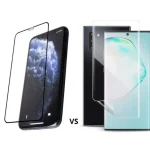
Curved screens can be difficult for tempered glass because rigid protectors may not follow the screen edges perfectly. Poor fit can cause lifting, bubbles, touch problems or customer complaints.
Hydrogel film is more flexible. That flexibility helps it follow curved surfaces better when the template and installation are correct.
This does not mean every hydrogel film works perfectly on every curved phone. Retailers must choose quality materials and train staff properly.
| Screen Type | Hydrogel Film Compatibility | Retail Note |
|---|---|---|
| Flat smartphone screens | Very strong | Easy to cut and install with proper template |
| Curved screens | Strong | Needs flexible film and careful edge application |
| Tablets | Strong | Requires larger film area and clean installation |
| Smartwatches | Moderate to strong | Depends on curve, size and template accuracy |
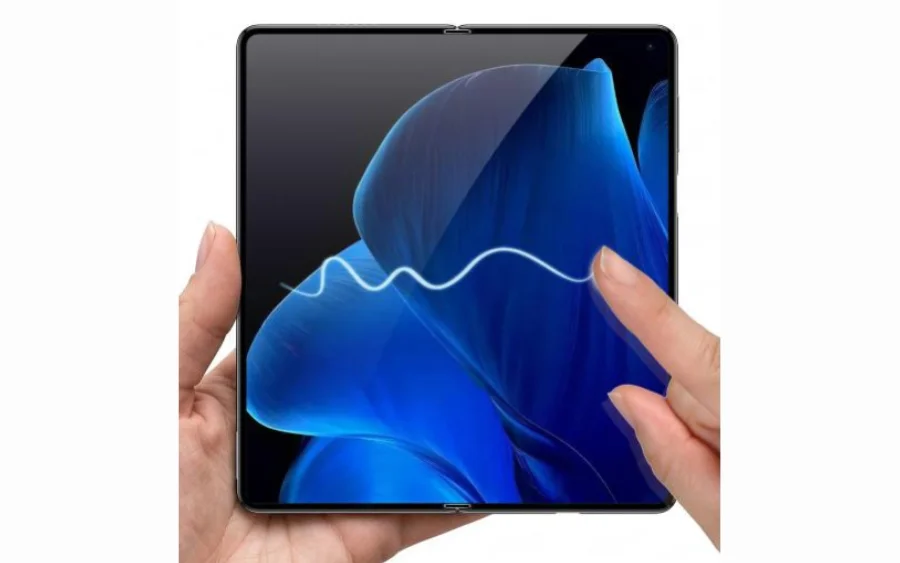
| Foldable devices | Specialized use | Requires compatible material and expert guidance |
| Camera lens areas | Depends on design | May require separate lens protection products |
How Does Cutting Plotter Compatibility Work?
Cutting plotter compatibility means that the film material, machine, software and device templates work together. A good system lets the operator select the device model, load the film and cut the protector accurately.
The global mobile accessories market continues expanding as users buy more screen protection, cases, chargers, cables and connected device products (Grand View Research, 2024). Stores that can offer faster customization have a stronger chance of capturing those accessory sales.
The plotter does not work alone. It needs compatible film material and updated model templates.
If the template is inaccurate, the final protector may not fit correctly. If the film is too weak, the customer may complain after installation.
Plotter Compatibility Checklist
- Does the film material cut cleanly?
- Does the template database include popular local models?
- Does the software receive regular updates?
- Can the machine cut phone, tablet and smartwatch templates?
- Does the film adhere well after cutting?
- Can the staff install the film without excessive bubbles?
- Does the finished protector match customer expectations?
Why Is Hydrogel Film Compatibility Important for Wholesalers?
For wholesalers, Hydrogel Film Compatibility affects how easy the product is to sell to retailers. A wholesaler that offers broad compatibility can present the product as a business solution, not only a supply item.
The National Retail Federation reported that retailers continue to focus on inventory efficiency and margin protection (NRF, 2024). Hydrogel film systems support both goals because they reduce SKU complexity and create service revenue.
Instead of selling boxes of pre-cut protectors that may become obsolete, wholesalers can sell film rolls, cutting plotters, installation tools and training.
This model creates repeat purchases. Retailers keep ordering film materials because they keep selling screen protection services.
Wholesale Advantages
- Lower inventory complexity for retail clients
- More repeat sales through film replenishment
- Better positioning than generic pre-cut protectors
- Stronger retailer loyalty through plotter systems
- Opportunity to sell training and installation tools
- Higher value offer for phone stores and repair shops
How Can Importers Use Compatibility to Choose the Right Film?
Importers should choose hydrogel films based on local device demand, retail channels and product quality. Supply chain reliability and product consistency remained major concerns for importers and B2B buyers in 2024 (KPMG, 2024).
A film that works well in one market may not be the best option in another if the device mix is different. Some countries have more Android mid-range devices. Others sell more premium iPhones or flagship Samsung models.
Importers should study the top-selling devices in their market before deciding which film system to buy. They should also evaluate whether the cutting plotter database supports those models.
Good compatibility begins before the purchase. It starts with market analysis.
Importer Evaluation Questions
- Which phone brands sell most in my country?
- Are curved screens common in my market?
- Do retailers need phone, tablet and smartwatch protection?
- Does the plotter database support local models?
- Can the supplier provide film options for different price levels?
- Is there training support for installation?
- Can the supplier support repeat orders reliably?
What Is the Difference Between Hydrogel, EPU, 9H Film and Tempered Glass?
Retailers often ask which protection material is best. The practical answer is that each material serves a different customer need.
Consumer electronics buyers increasingly compare durability, touch experience and product quality before choosing accessories (Consumer Technology Association, 2024). Stores should therefore offer a clear protection menu rather than only one option.
Hydrogel film is flexible and compatible with many devices. EPU film can be positioned as a premium material with better feel and durability.
Tempered glass is familiar and still useful, but it may not solve every curved-screen or on-demand inventory problem.
| Material | Best For | Compatibility Strength | Retail Positioning |
|---|---|---|---|
| Standard Hydrogel Film | Daily protection and broad device coverage | High | Flexible and practical |
| 9H Hydrogel Film | Customers who want stronger resistance | High | Premium flexible protection |
| EPU Film | Premium touch and durability | High | Higher-value protection option |
| Privacy Film | People who use phones in public places | Medium to high | Privacy and protection |
| Tempered Glass | Flat screens and customers who prefer rigid protection | Medium | Familiar rigid protection |
Devia Global explains material positioning in more detail in its article about what EPU film is and why it is more durable.
How Can Retailers Sell Compatible Hydrogel Film More Effectively?
Retailers sell compatible hydrogel film more effectively when they explain the benefit in simple language. Customers do not care about technical compatibility terms. They care whether the protector fits their phone, looks clean and protects the screen.
Accenture reported that consumers respond better to relevant product recommendations when the shopping experience feels personalized (Accenture, 2024). Hydrogel film is a perfect category for this approach because the recommendation depends on the customer’s device.
The store employee should ask what phone the customer uses, check the model, recommend the best film type and offer installation.
This makes the experience easy and professional.
Simple Sales Script
“We can cut a hydrogel screen protector for your exact phone model here in the store. It fits better than many generic options, works well for modern screens and gives your device daily protection without needing us to stock every pre-cut model.”
Retail Screen Protection Sales Perspective
What Problems Happen When Compatibility Is Poor?
Poor compatibility creates returns, complaints and lost trust. A protector that does not fit correctly can lift at the edges, collect dust, create bubbles or interfere with touch sensitivity.
BrightLocal reported that consumers continue to rely heavily on reviews when evaluating products and local businesses (BrightLocal, 2024). A few bad installation experiences can hurt a store’s reputation quickly.
For wholesalers and importers, poor compatibility can also damage relationships with retailers. Stores do not want products that create customer complaints.
This is why testing is important before scaling.
Common Compatibility Problems
- Edges lifting after installation
- Incorrect camera or sensor cutouts
- Film too small or too large for the screen
- Reduced touch sensitivity
- Visible bubbles or dust marks
- Film not suitable for curved edges
- Template database missing important local models
How Should Store Owners Test Hydrogel Film Compatibility?
Store owners should test hydrogel film compatibility before offering the product at scale. A small test can prevent many customer complaints later.
Deloitte reported that retailers continue to focus on customer experience, operational efficiency and stronger in-store value (Deloitte, 2024). Screen protection testing supports all three goals.
Start with the most common device models in your area. Test flat screens, curved screens and older devices.
Then evaluate the installation result after 24 to 72 hours, not only immediately after application.
Testing Process
- Select 10 to 20 common phone models in your market.
- Cut hydrogel film using the plotter templates.
- Install the film using the same process staff will use with customers.
- Check edge fit, camera cutouts and touch response.
- Review the result after one day and after three days.
- Document models that need special installation care.
- Train staff based on real test results.
- Collect feedback from first customers before scaling.
How Does Devia Global Support Hydrogel Film Compatibility?
Devia Global supports the screen protection market with mobile accessories, hydrogel films, EPU films, cutting plotters and retail-oriented product solutions. For phone store owners, wholesalers and importers, this ecosystem can help simplify product selection and retail implementation.
Shenzhen remains one of the world’s most important electronics and manufacturing hubs, supporting global product development and consumer electronics supply chains (World Economic Forum, 2024). This matters for buyers that need product variety, speed and accessory innovation.
Devia Global’s value is not only in the film itself. The broader value is in building a screen protection business that can support many device models, many store types and many customer needs.
That is why compatibility should be part of the buying conversation from the beginning.
What Is the Best Strategy for Wholesalers Selling Hydrogel Film?
The best strategy is to sell hydrogel film as a complete retail solution. Do not present it as only a roll of material.
B2B buyers increasingly expect suppliers to provide useful information, clear positioning and support across the buying journey (McKinsey, 2024). Wholesalers can win more retailers by showing how the system makes money.
A complete offer should include film material, plotter compatibility, installation guidance, retail display suggestions and bundle ideas.
This helps the store owner understand the business benefit quickly.
Wholesale Offer Structure
- Hydrogel film material options
- Cutting plotter recommendation
- Starter kit for installation
- Training material for store employees
- Retail display or counter communication
- Bundle strategy with cases and chargers
- Reorder plan based on consumption
Devia Global also shares retail growth ideas in screen protection profit strategies for stores.
How Can Compatible Hydrogel Film Increase Store Profit?
Hydrogel Film Compatibility can increase store profit because it helps the retailer say yes to more customers. If the store can protect more devices, it can convert more visits into sales.
Retailers continue to look for categories that improve average ticket value and create service-based differentiation (NRF, 2024). Hydrogel film supports this because the store can sell product plus installation.
A customer who comes for a case may also buy screen protection. A customer who comes for a charger may also need a film replacement.
The key is to make the offer visible and simple.
Practical Profit Actions
- Create a screen protection station near the counter.
- Show hydrogel, EPU, privacy and tempered glass options.
- Offer professional installation with every film sale.
- Bundle hydrogel film with phone cases.
- Use cutting plotter service as an in-store attraction.
- Track which models and materials sell most.
- Reorder film based on real usage data.
FAQ: What Do Buyers Ask About Hydrogel Film Compatibility?
What does hydrogel film compatibility mean?
Hydrogel film compatibility means the ability of a hydrogel screen protection film to fit different devices, screen shapes, sizes, edges and usage needs. For retailers and wholesalers, compatibility is important because it determines how many phone models can be served with the same film material or cutting plotter system. Strong compatibility helps reduce inventory risk and improves the chance of selling protection to more customers.
Is hydrogel film compatible with curved screens?
Hydrogel film is often a strong option for curved screens because it is flexible and can adapt better to edge-to-edge displays than many rigid protectors. Compatibility still depends on the film quality, cutting template, installation process and device design. Retailers should test the film with common curved models in their market and train staff to apply it correctly for better adhesion and customer satisfaction.
Can one hydrogel film work for many phone models?
One hydrogel film roll or sheet can support many phone models when used with a compatible cutting plotter and template database. The film material is cut on demand based on the selected device model. This is useful for phone stores, wholesalers and importers because it reduces the need to stock hundreds of pre-cut protectors while still allowing the retailer to serve many smartphones, tablets and smartwatches.
How can wholesalers use hydrogel film compatibility to reduce inventory risk?
Wholesalers can use hydrogel film compatibility to reduce inventory risk by selling film rolls, cutting plotter systems and installation materials instead of relying only on pre-cut protectors. This approach helps retailers serve many device models with fewer SKUs. It also creates repeat orders because stores continue buying film materials as they sell screen protection services to customers.
What should retailers check before selling hydrogel film?
Retailers should check device coverage, cutting accuracy, touch sensitivity, edge adhesion, installation difficulty, packaging quality and customer feedback before selling hydrogel film at scale. They should also compare different film types such as standard hydrogel, 9H hydrogel, EPU film and privacy film. The best retail strategy is to match the film type to the customer’s device, usage habits and protection expectations.
Read Also
Final Recommendation for Store Owners, Wholesalers and Importers
If you own a phone store, distribute mobile accessories or import screen protection products, Hydrogel Film Compatibility should be one of your main buying criteria. Good compatibility helps you serve more devices, reduce inventory waste and create a stronger retail service.
The best approach is to combine quality hydrogel film, updated cutting templates, reliable plotter systems, staff training and a clear retail sales process.
To explore hydrogel films, EPU films, cutting plotters, screen protection solutions and mobile accessories for B2B channels, visit Devia Global hydrogel film and mobile accessories solutions.