If your phone lives a “normal” life—desk, couch, occasional coffee spill—almost any protector can survive. But heavy use is different. Heavy use is: keys + coins in the same pocket, daily commuting, gym bags, warehouse floors, delivery routes, construction dust, constant gaming sessions, kids grabbing the phone like it’s a toy, or a store team demoing devices all day long.
When people search for the Best types of mobile screen protectors, what they really want is simple: Which protector won’t crack, scratch, peel, or feel awful after a few weeks? And right behind that: Which one is worth the money, and which one is just marketing?
This guide breaks it down in a straight, practical way. You’ll understand the main types, what they’re best at, where they fail, and how to pick the right match for heavy daily use—without overpaying or getting stuck with a protector that ruins the touch experience.
Best types of mobile screen protectors for heavy use: quick overview
Here’s the reality: there is no “one perfect protector” for every heavy-use scenario. The right pick depends on how your phone gets abused—impact drops, scratch exposure, oily hands, heat, humidity, or constant friction.
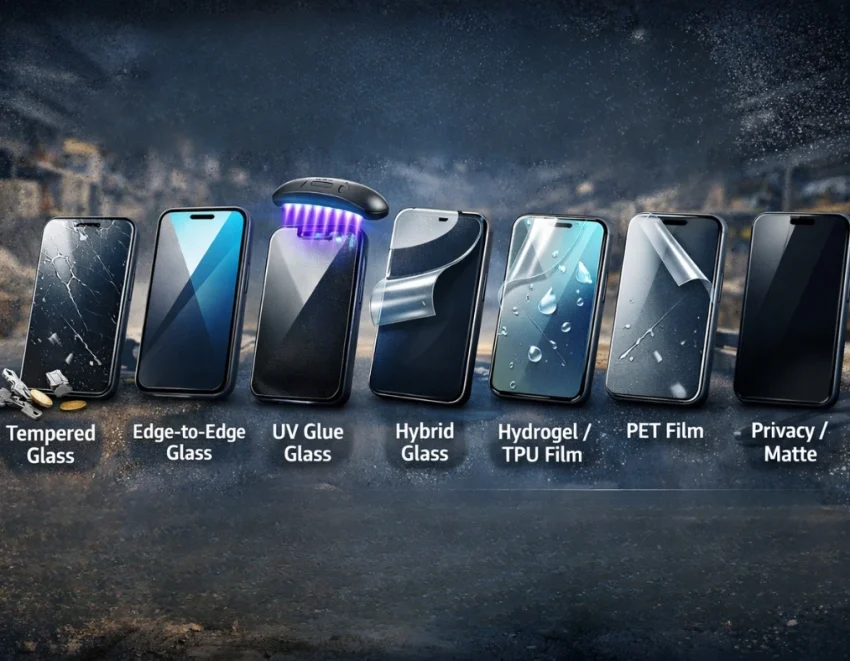
These are the 7 types we’ll cover:
-
Tempered glass (standard adhesive)
-
Edge-to-edge tempered glass (curved/3D)
-
UV glue tempered glass (LOCA-style)
-
Hybrid glass (flexible + impact resistant)
-
Hydrogel / TPU film (self-healing flexible film)
-
PET film (thin plastic “basic shield”)
-
Specialty protectors (privacy, matte/anti-glare, blue-light variants)
Now let’s go type by type and get brutally clear on what works for heavy use.
1) Tempered glass (standard adhesive): the go-to for impact + feel
What it is: A rigid glass layer (commonly marketed as “9H”) with adhesive—usually around the edges or across the full surface depending on the model.
Why it’s popular for heavy use:
-
Feels closest to the real screen (smooth, “glass-on-glass” feel)
-
Strong everyday scratch resistance
-
Handles minor impacts well
-
Usually has decent oleophobic coating (less fingerprint smudge)
Where it fails in heavy use:
-
Hard drops on corners can crack it fast
-
Cheap versions chip on edges, especially with cases that press the glass
-
If the adhesive coverage is weak, you’ll get dust lines, lift, or bubbles later
Best for:
-
People who drop phones occasionally (not constantly)
-
High-touch users who hate the “rubbery film” feeling
-
Office/retail/store environments where the phone is handled all day
Pro tip for heavy use:
Choose tempered glass with:
-
Full adhesive coverage (not just edge glue)
-
Rounded edges
-
Case-friendly sizing (a tiny margin matters)
If you want a protector that feels premium and doesn’t change the experience, this is usually the first move.
2) Edge-to-edge tempered glass (curved/3D): looks cleaner, needs the right fit
What it is: Glass shaped to cover more of the display, including curved edges on certain phones.
Why people choose it:
-
Full-screen aesthetic (no “frame” gap)
-
Better coverage if you swipe edges often
-
Looks more premium on display phones
Heavy-use advantages:
-
Better coverage against edge scratches
-
Nice for users who do a lot of gesture navigation
Where it fails in heavy use:
-
Case compatibility can be tricky (cases can lift the edges over time)
-
Curved screens make adhesion harder, so cheaper glass becomes a bubble factory
-
Edge chipping is more common if it’s not well-made
Best for:
-
Heavy gesture users
-
Anyone who hates seeing uncovered edges
-
Retail displays where the phone needs to look “complete”
Reality check:
Edge-to-edge can be amazing—or annoying—depending on your case and the glass quality. For heavy use, “perfect fit” matters more than marketing labels.
3) UV glue tempered glass (LOCA-style): strongest bond, highest install skill
What it is: Tempered glass installed with a liquid optical adhesive cured by UV light. It’s designed to bond more completely, especially on curved displays.
Why it’s a heavy-use beast (when installed right):
-
Strong adhesion across the entire screen
-
Better clarity than many edge-glue curved options
-
Often reduces the “hollow tap” feeling
-
Can handle heavy swiping and pressure without lifting
Where it fails in heavy use:
-
Installation is not beginner-friendly
-
Bad installs = adhesive leaks, sensor issues, messy edges
-
Removal later takes more effort
-
Not ideal for people who change protectors frequently
Best for:
-
Users with curved screens who want real durability
-
Retail/service environments that can install properly
-
Anyone who keeps the phone for a long time and wants maximum bond strength
If you’re a shop owner:
This type can be a premium service: customers pay more when the result looks factory-perfect. But it demands training and clean install conditions.
4) Hybrid glass: flexible toughness for people who crack glass nonstop
What it is: A “middle ground” between glass and film—often layered materials that flex more than standard tempered glass while still offering strong protection.
Why it’s underrated for heavy use:
-
Better impact absorption than rigid glass in many scenarios
-
Less shatter risk
-
Often thinner and lighter than thick glass
-
Can be more case-friendly
Where it fails:
-
Scratch resistance varies wildly by brand/material
-
Feel can be slightly different (not always as slick as pure glass)
-
Marketing terms are messy—some “hybrid” products are basically film
Best for:
-
People who crack tempered glass constantly
-
Workers in active environments (delivery, warehouse, field work)
-
Users who need durability but still want a premium feel
How to choose smart:
Look for hybrid options that clearly state:
-
Multi-layer construction
-
Strong oleophobic coating
-
Impact resistance claims backed by a reputable manufacturer
Hybrid is for the person who’s tired of replacing cracked glass every month.
5) Hydrogel / TPU film: self-healing flexibility for real-world abuse
What it is: A flexible film that can “self-heal” minor scratches over time and conforms well to curved screens.
This is one of the Best types of mobile screen protectors for specific heavy-use profiles—especially where scratches and friction are constant.
Why heavy users love it:
-
Excellent for scratch-heavy environments (keys, dust, grit)
-
Doesn’t shatter
-
Works great on curved edges
-
Self-healing reduces the “worn out” look
-
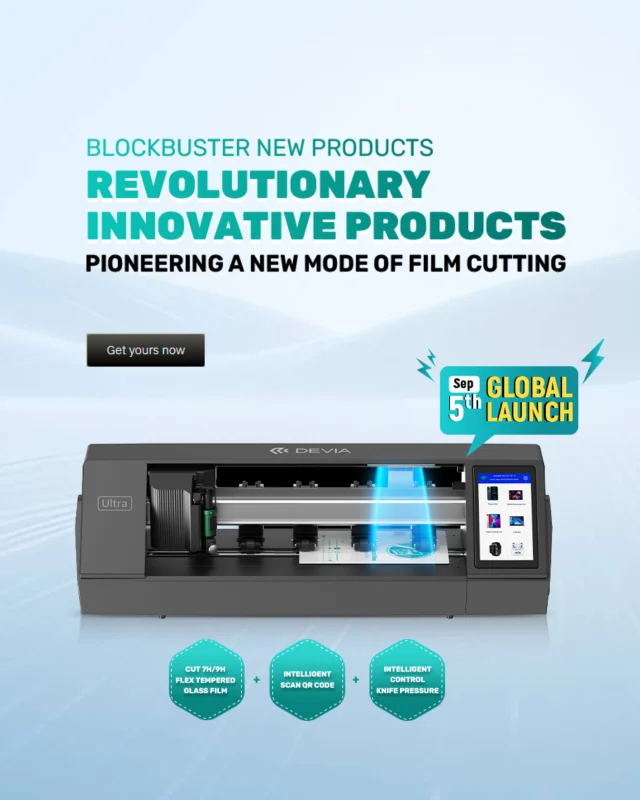
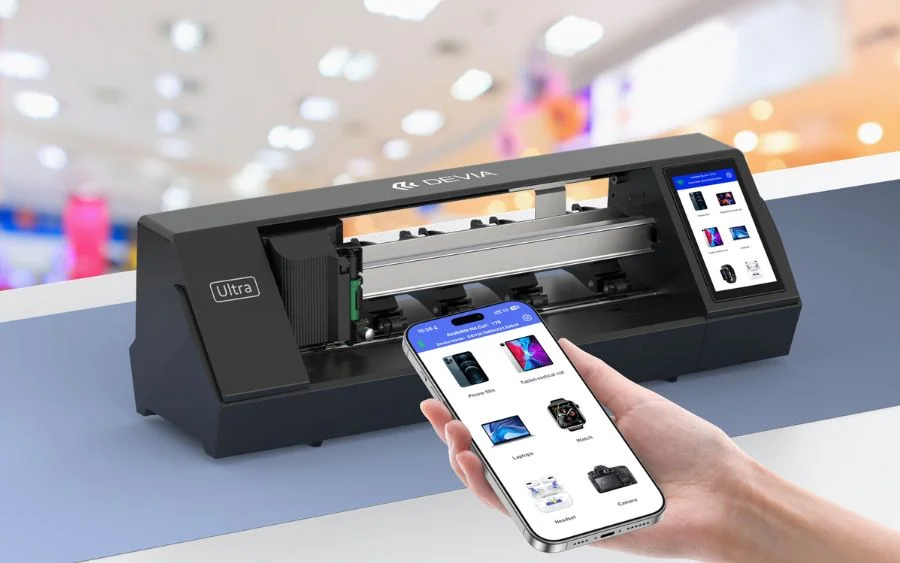
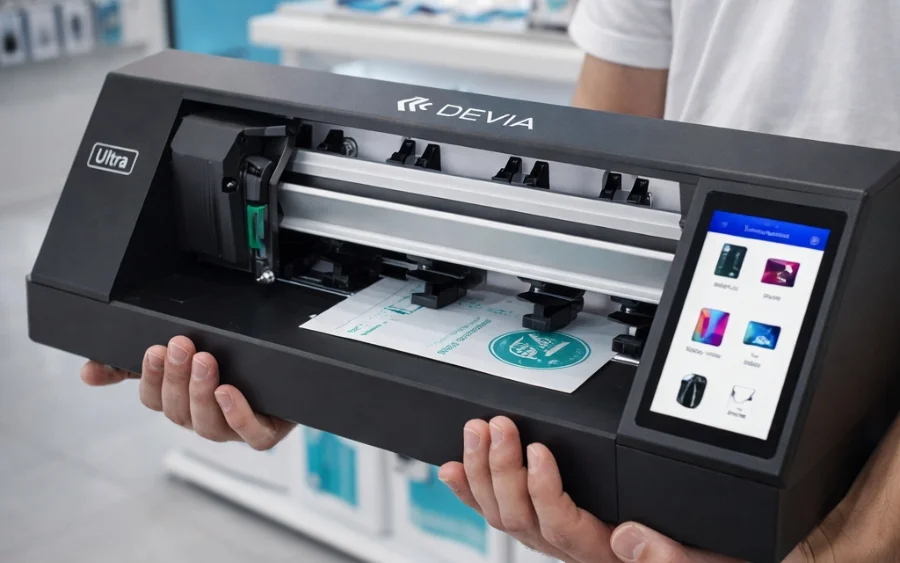
Often pairs perfectly with plotter cutting systems (custom fit for many models)
Where it fails:
-
Doesn’t feel like glass (more “soft” under the finger)
-
Can dent under sharp pressure (then may heal, but not always)
-
Installation technique matters; stretching or misalignment looks bad
-
Some people hate the texture for gaming
Best for:
-
People who scratch screens more than they drop phones
-
Users with curved/rare phone models (custom cut advantage)
-
Retailers/service shops offering on-demand fitting
-
Users who want protection without thickness
Heavy-use pro move:
Hydrogel shines when you combine it with:
-
A good case (drop protection)
-
Film for scratch control
That combo is “real life durable.”
At Devia Global, this category is a big deal because it supports wide device coverage and consistent installs at scale—especially when you’re serving many phone models across regions.
6) PET film: thin, cheap, and honest about what it can’t do
What it is: A basic plastic film—usually the thinnest option.
Why it exists:
-
Low cost
-
Decent scratch protection against light friction
-
Minimal impact on screen clarity
-
Easy to replace
Why it’s not ideal for heavy use (but still has a place):
-
Poor impact protection (drops will still crack screens)
-
Scratches show more quickly than higher-grade films
-
Feels less premium
-
Can peel at edges under heat/humidity + heavy pocket use
Best for:
-
Backup protection when budget is tight
-
Temporary protection (travel, short-term use)
-
Devices that don’t face heavy drop risk but do face light scuffing
Heavy-use verdict:
PET is not the “main character” for heavy use—but it can be a useful baseline option for entry-level buyers or secondary devices.
7) Specialty protectors: privacy, matte/anti-glare, blue-light (pick your tradeoff)
This is where people get trapped by “cool features” and forget the basics. Specialty protectors can absolutely be part of the Best types of mobile screen protectors list—if you understand the tradeoffs.
Privacy screen protectors
Best for:
-
Commuters
-
Travelers
-
People handling business info in public
-
Retail staff with customer data on-screen
Tradeoffs:
-
Slightly darker screen
-
Some reduce viewing angles too aggressively
-
Cheaper ones reduce sharpness
Heavy-use angle:
Privacy protectors are great when your risk is visual exposure more than physical damage. Many are available as tempered glass (better feel) or film (better edge coverage).
Matte / anti-glare protectors
Best for:
-
Outdoor workers
-
People under bright store lighting
-
Creators who hate reflections
Tradeoffs:
-
Matte can reduce sharpness slightly
-
“Paper feel” texture can increase friction (some love it, gamers may hate it)
Heavy-use angle:
Matte helps when visibility matters. Just don’t expect it to feel like naked glass.
Blue-light filtering variants
Best for:
-
Night users
-
People who feel eye strain (subjective, but many prefer it)
Tradeoffs:
-
Possible color shift (warmer display)
-
Some users dislike how photos/videos look
Heavy-use angle:
This is more comfort than durability. If you choose it, still prioritize impact/scratch performance first.
How to choose the right protector for “heavy use” (without guessing)
Heavy use isn’t one thing. It’s a pattern. Use this quick decision framework.
Step 1: Identify your primary damage type
-
Frequent drops: prioritize tempered glass, hybrid, or UV glue glass
-
Constant scratches/friction (pockets, dust, tools): hydrogel/TPU is your friend
-
Curved screen headaches: hydrogel or UV glue glass usually wins
-
Public privacy risk: privacy glass/film + a good case
-
Outdoor glare: matte/anti-glare
Step 2: Match your case first, protector second
Most failures come from bad pairing:
-
Tight cases lift edge glass
-
Soft cases collect dust at edges
-
Some cases push on curved glass corners
If your case is non-negotiable, pick a protector that’s labeled case-friendly and leaves a clean margin.
Step 3: Don’t worship the “9H” label blindly
“9H” often refers to a pencil hardness test marketing standard, but products vary massively in:
-
Glass quality
-
Coating durability
-
Adhesive coverage
-
Edge finishing
In heavy use, build quality beats the label.
Step 4: Prioritize coating + edges
For heavy use, these details matter more than people think:
-
Oleophobic coating: reduces smudges and makes cleaning easier
-
Rounded edges: reduces chipping and improves comfort
-
Full adhesive: prevents lifting and dust lines
Heavy-use scenarios and the best match
Warehouse / field work / tools nearby
-
Top pick: hydrogel/TPU + rugged case
-
Alternative: hybrid glass + rugged case
Why: scratches are constant, and shatter isn’t your only enemy.
Delivery drivers / constant in-and-out of pockets
-
Top pick: tempered glass (case-friendly) or hybrid
Why: impact + friction combo.
Gamers / heavy tapping and swiping
-
Top pick: high-quality tempered glass
Why: touch feel and glide matter a lot.
Retail staff or phone shop demo devices
-
Top pick: tempered glass or UV glue glass
Why: appearance, clarity, premium feel, and high-touch endurance.
Travelers / public transport / privacy needs
-
Top pick: privacy tempered glass
Why: protection + discretion.
Hot climates / humidity (edge peel problems)
-
Top pick: full-adhesive tempered glass or well-installed hydrogel
Why: cheap adhesives fail faster in heat.
Installation: the difference between “lasts 2 days” and “lasts 6 months”
You can buy the right protector and still lose if the install is sloppy. For heavy use, installation quality is not optional.
Quick heavy-use install checklist
-
Wash hands (seriously—oil causes lifting)
-
Clean screen with alcohol wipe, then microfiber
-
Use dust stickers aggressively under bright light
-
Align before removing adhesive backing
-
Press from center out slowly
-
Give it time to bond (especially films)
Film-specific tips (hydrogel/TPU)
-
Don’t overstretch
-
Use the correct amount of solution (if the system requires it)
-
Let it cure/set before putting in a tight case
-
Expect minor “wet look” haze early—many films settle clearer after a short period
Glass-specific tips
-
Avoid installing in a dusty room
-
If edges lift, check case pressure
-
Don’t “force” the glass down—fix dust first
Maintenance habits that extend protector life (and keep it looking premium)
Heavy use means you need simple routines:
-
Clean with microfiber, not shirt fabric (shirt fibers scratch over time)
-
Avoid harsh chemicals (some destroy coatings)
-
Replace protectors when edges chip or adhesion lifts—don’t wait until the screen takes damage
-
If you work around metal dust or sand, clean the screen/case edges often (those particles are basically sandpaper)
A smart “best of both worlds” setup for heavy users
If you’re the kind of person who truly punishes a phone daily, the best setup often isn’t one product—it’s a combo:
-
Scratch control: hydrogel/TPU film
-
Drop control: a high-quality shock-absorbing case
Or, if you hate film feel:
-
Impact + feel: premium tempered glass
-
Extra safety: case with raised bezels
This is how heavy-use users actually win long-term: protect the phone from the damage pattern, not from a generic idea of damage.
FAQ: quick answers people actually want
Which is better for heavy use: 7H or 9H?
Think of it like this: higher hardness often means better scratch resistance, but durability depends on overall build quality, coating, edges, and installation. Heavy users should focus on real performance, not just the label.
Do screen protectors reduce touch sensitivity?
High-quality protectors usually don’t. Problems happen with thick low-quality glass, poor adhesive coverage, or protectors not designed for the device.
Are liquid screen protectors worth it?
For heavy use, they’re usually not the best choice. They can’t match the impact protection of glass or the scratch control of a good film. They’re more “nice idea” than “serious protection.”
How often should I replace a protector?
When you see:
-
edge lifting
-
deep scratches you can feel
-
cracks/chips
-
coating worn off (smears constantly)
For heavy users, replacement is normal. The protector is doing its job.
Can I use a protector with any case?
Not always. Case compatibility is one of the biggest failure points. If you want long-term heavy-use durability, pick a protector that’s designed to work with cases.
Final takeaway
The Best types of mobile screen protectors for heavy use depend on your damage pattern:
-
Want premium feel + strong everyday protection? Tempered glass
-
Curved screen and want full coverage? Edge-to-edge glass or UV glue glass
-
Crack glass nonstop? Hybrid
-
Scratch-heavy life, lots of friction, lots of models? Hydrogel/TPU
-
Budget or temporary use? PET
-
Need extra functionality? Privacy or matte, as long as you accept tradeoffs
Heavy use is real life, not a lab test. Choose based on how your phone actually gets hit, scratched, and handled every single day.
CONTACT US