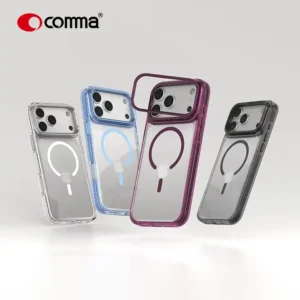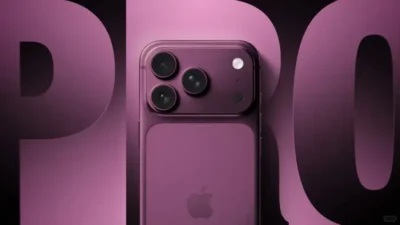


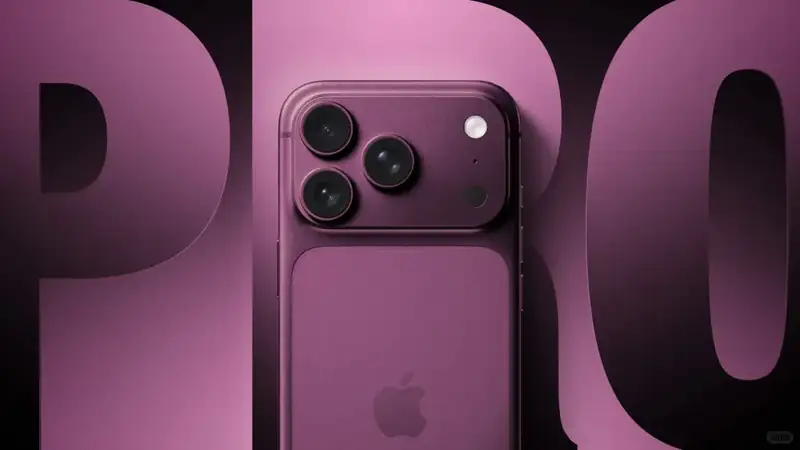
iPhone photography is about to see its biggest hardware upgrade in years. With the iPhone 18 Pro series confirmed to feature a physical 10-stop variable aperture main camera, Apple is moving beyond an approach that relied solely on computational photography and entering a new era of imaging that combines physical optical control with algorithmic processing. A wide aperture range from f/1.4 to f/4.0 and up to 40% more light intake in low-light conditions bring a leap forward in night shots, portrait bokeh and exposure control for video.
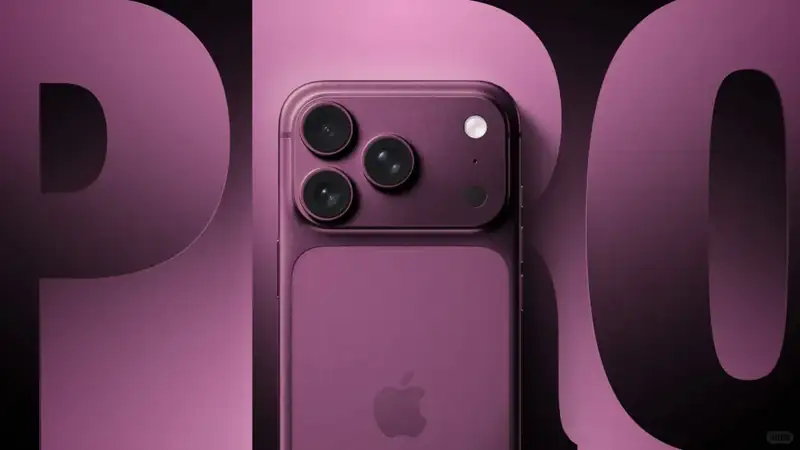
Variable aperture rewrites the rules of smartphone photography — and it also rewrites the standards for lens protection. A camera lens protector is no longer an essential accessory you can “just stick on”; it is now a precision accessory that has to match flagship optical hardware.
With a fixed aperture, a standard HD lens protector causes almost no loss of image quality. With a variable aperture, however, the protective film on the outermost layer of the lens becomes an important factor in image quality. The light-transmission loss, coating defects, misaligned cut-outs and thickness errors of an ordinary protector are all magnified by the precision optical structure of a variable aperture.
This article breaks down three core issues: the imaging changes brought by variable aperture, the critical weaknesses of ordinary lens protectors, and how comma solves the balance between protection and image quality on variable-aperture models with a dedicated, custom-designed solution.
01 What does a variable aperture change?
Simply put, a variable aperture is a set of physical blades inside the lens that open and close, changing the size of the opening to control how much light comes in and the depth-of-field effect. When the aperture opens wide (f/1.4), more light comes in and background blur looks more natural; when it closes down (f/4.0), less light comes in, depth of field increases and highlights are easier to control.
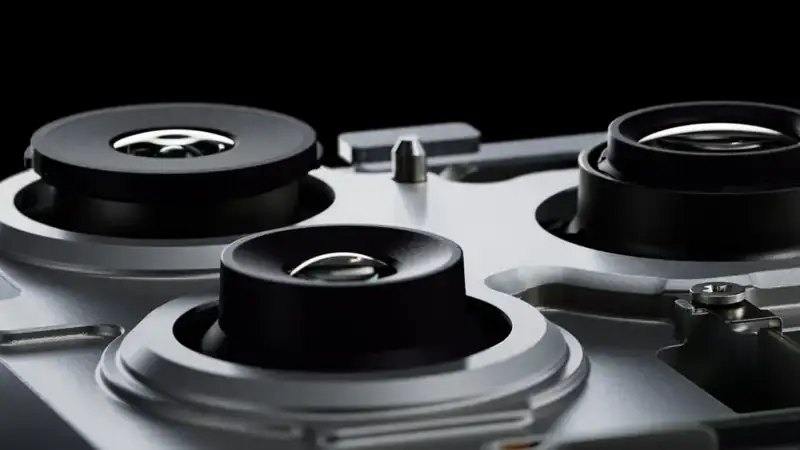
But this is not the same as algorithmic blur. In previous iPhone generations, Portrait mode and depth effects relied mainly on computational photography — simulating background blur through multi-frame processing and depth estimation. This approach has always fallen short of true optical bokeh in edge handling, the shape of light spots and the naturalness of transitions.
Variable aperture hands part of the control back to the optical system. The physical movement of the lens blades produces real changes in light intake and real optical depth of field — something algorithms cannot fully replace.
In everyday use, this brings three changes:
First, night and low-light photography. At f/1.4, light intake increases by about 40% compared with the previous fixed-aperture generation, which means lower ISO, less noise and cleaner night shots.
Second, depth of field and bokeh. A wide aperture delivers more natural background blur and better subject separation, noticeably improving the sense of depth in portrait and still-life photos.
Third, video recording. Stopping down the aperture controls light intake, making motion blur more natural and exposure more stable, while reducing overexposure and blown-out highlights.
All three changes share one prerequisite: light must pass through the lens to the sensor without interference. And the protective film on the very outside of the lens is exactly the first checkpoint light has to pass through.
02 Why ordinary lens protectors can compromise variable-aperture image quality
In the fixed-aperture era, the impact of a lens protector on image quality was relatively limited — with a fixed aperture size and constant light intake, a protector with reasonable light transmission usually caused no visible loss of quality.
Variable aperture changes that premise. When the aperture can be adjusted across ten stops from f/1.4 to f/4.0, any additional optical interference is amplified. Specifically, four variables are the most likely to cause problems.
Variable 1: Insufficient light transmission eats directly into the extra light intake
One of the biggest selling points of variable aperture is roughly 40% more light in low-light conditions. But if a lens protector’s light transmission is only 90% or even lower, it is like placing a fixed ND filter in front of the aperture — part of that 40% gain is simply lost. When shooting at night, users may find that noise hasn’t noticeably decreased. The problem isn’t the phone; it’s the film.
Variable 2: Substandard AR coating amplifies flare and ghosting
An AR (anti-reflective) coating uses light interference to reduce reflections on the lens surface, allowing more light to pass through. In the fixed-aperture era, a slightly inferior coating might only cause minor flare in strong light. But at the small-aperture setting (f/4.0), light passes through a smaller opening, and any surface reflection creates more visible light spots and ghosting. Halos around lights in night shots and purple fringing when shooting into the light can both get worse because of a single poorly coated film.
Variable 3: Misaligned cut-outs physically block the aperture blades
This is the most distinctive problem of the variable-aperture era. The aperture blades move inside the lens as they open and close. If the position, shape or size of the lens protector’s cut-out is even slightly off, the edge of the film may physically obstruct the blades’ range of motion, or create additional vignetting at small-aperture settings.
Variable 4: Thickness and flatness alter the optical path
If a lens protector is too thick or its surface is not flat enough, it changes the angle and path at which light enters the lens. At the wide-aperture setting (f/1.4), depth of field is very shallow, so even a tiny shift in the optical path can cause focus shift or softer edges. An uneven film surface can also cause uneven changes in light transmission across different aperture settings.
These four core issues make it clear: ordinary lens protectors designed for fixed apertures can no longer meet the precise optical requirements of variable-aperture models. Lens protection for variable aperture needs to be upgraded to a high-precision optical process that combines an accurate structure, lossless light transmission and professional light control.
03 comma’s solution: lens protection designed specifically for variable aperture
With the special optical structure of the new iPhone’s variable aperture, the problems of traditional lens protectors — poor light transmission, misaligned cut-outs and blade obstruction — are becoming more and more obvious. comma has developed a brand-new, dedicated lens protection solution. Built on molds made from real-device data and on proven optical and protective technologies, it solves four major issues at once — structural obstruction, image quality loss, insufficient protection, and smudges and scratches — and is suited to every shooting scenario on the new phone.
1. Precision molds from real-device data, split design that blocks neither aperture nor flash
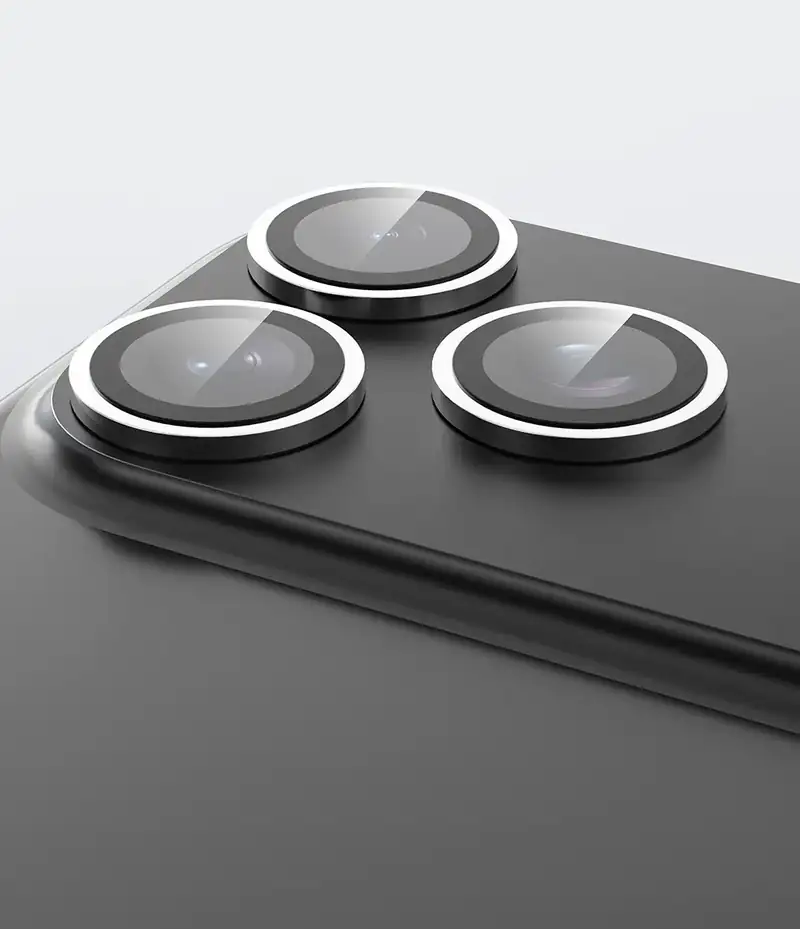
Molded 1:1 from real-device data, its dedicated split structure precisely matches the layout of the variable-aperture camera module, with exact cut-out positioning. It never obstructs the movement of the aperture blades or the flash, and fully supports aperture adjustment across the entire f/1.4–f/4.0 range, with no vignetting and no obstruction. It adheres firmly and seamlessly, leaves no adhesive residue or marks when removed, and can be reapplied repeatedly — eliminating at the source the image-quality and functional problems caused by misaligned cut-outs.
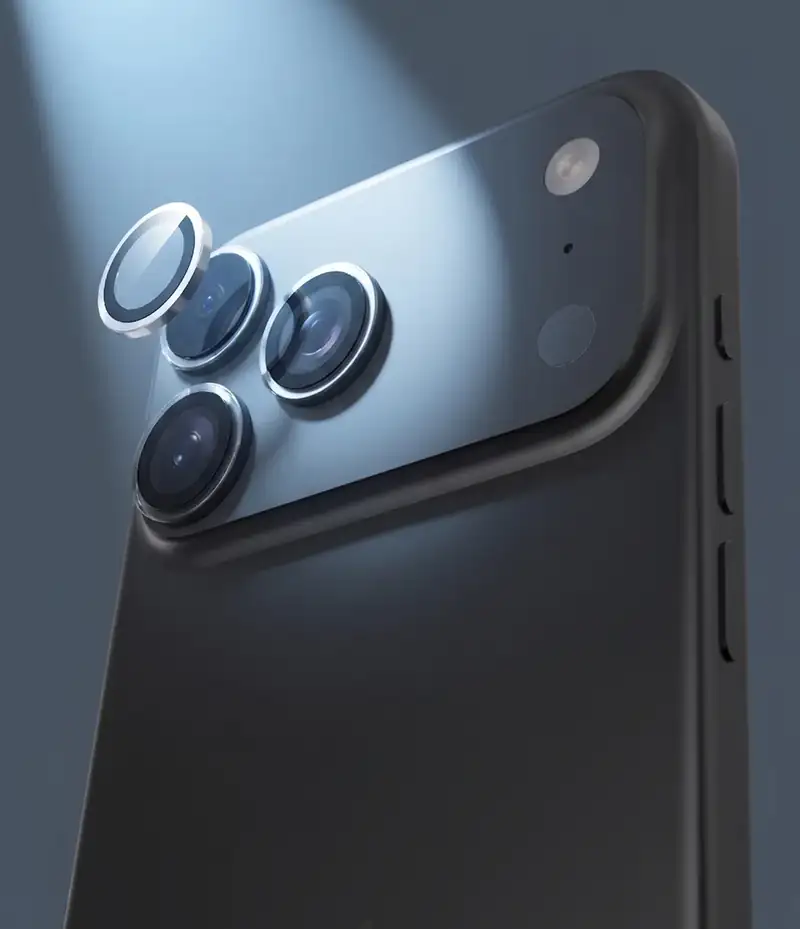
2. Optical-grade high-transparency glass with AR coating for truly lossless image quality
Made with a professional optical-grade high-transmission glass substrate and a multi-layer AR anti-reflective optical coating, it greatly reduces light loss from reflection and effectively suppresses flare, ghosting and purple fringing in night and backlit shots. It fully preserves the high light-intake advantage of the f/1.4 wide aperture, for cleaner night shots, more natural bokeh and more stable video exposure — faithfully reproducing the flagship image quality of the phone’s original lens.
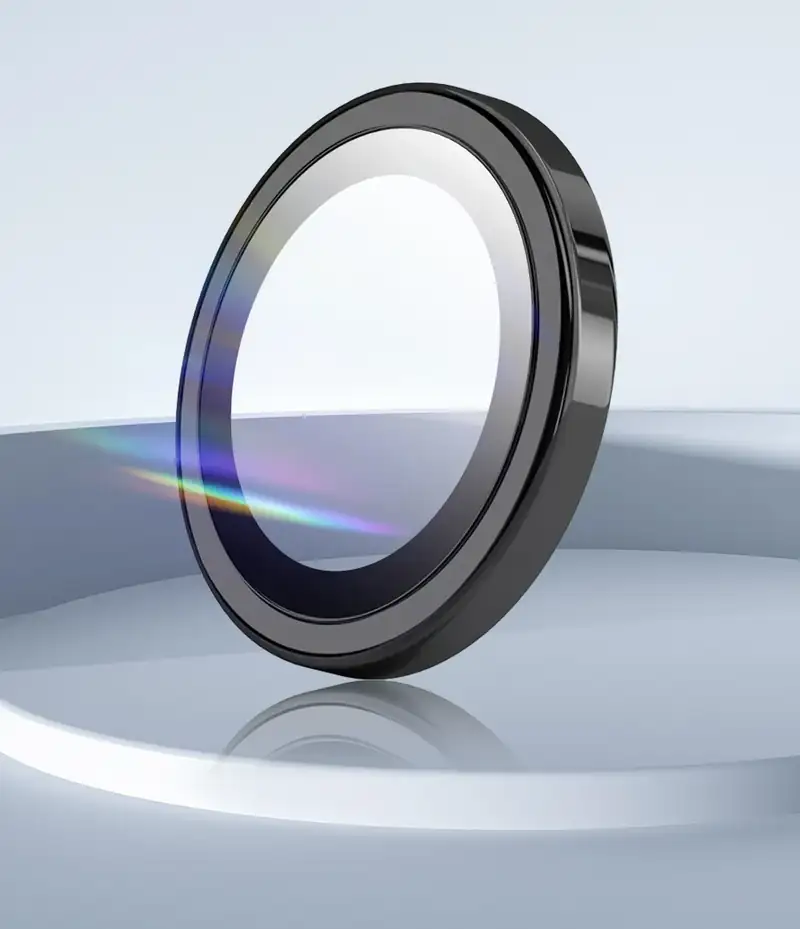
3. Aerospace-grade shatterproof titanium alloy for tough scratch and drop protection
Combining an aerospace-grade shatterproof titanium alloy frame with KK9 military-grade tempered glass, and finished with a precision-engraved anti-shatter texture, it offers both a slim profile and outstanding protection against everyday bumps, drops and scratches. Its metal ring matches the original color of the phone and wraps the lens 360°, blending in discreetly while keeping the phone looking great.
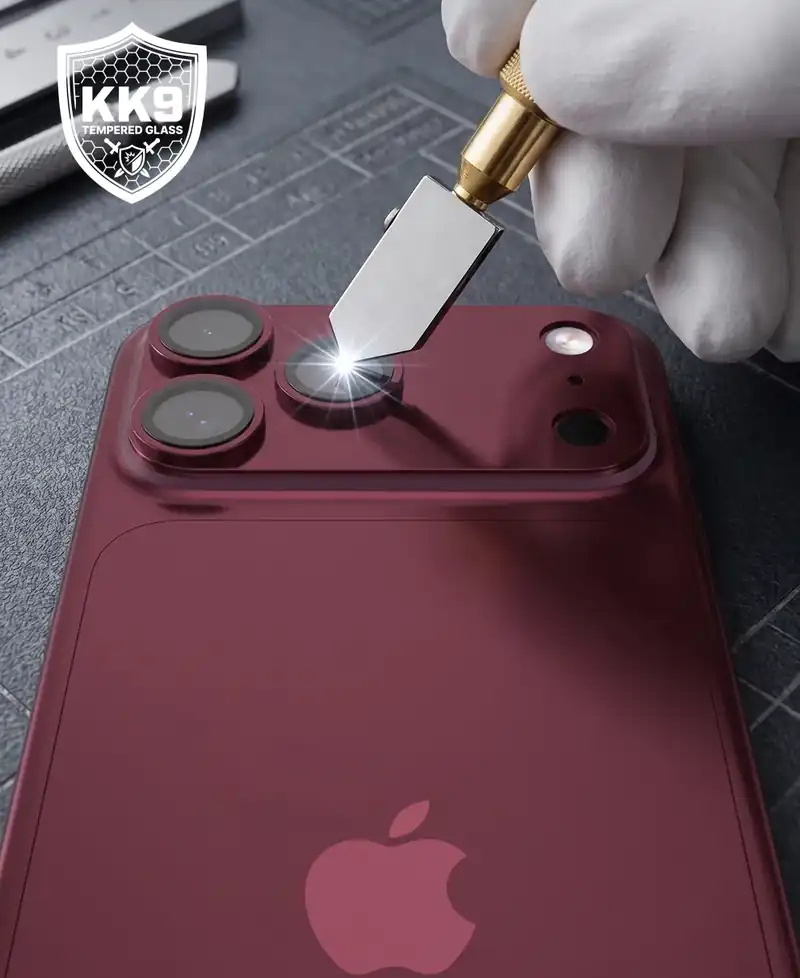
4. Premium oleophobic coating: water-resistant, oil-repellent and anti-fingerprint
An upgraded electroplated oleophobic process delivers excellent water resistance, oil repellency and fingerprint resistance, so everyday sweat, oil and dust don’t easily stick. The lens stays clear and dry over the long term, and light transmission and photo quality aren’t affected by built-up smudges — keeping images crisp and bright. A dedicated alignment tool is also included, so even first-timers can apply it precisely, completely avoiding crooked or misaligned installation.
04 Four product-selection criteria for channel partners
For mobile retail stores and channel partners, the iPhone’s variable aperture is not just a camera upgrade — it is also an upgrade in how accessories should be selected. In the past, lens protectors were chosen mainly on price and protection level; now, four additional factors need attention.
Criterion 1: Has the product been re-molded for variable-aperture models, rather than reusing an old design?
This is the most basic and most critical point. If a supplier’s lens protector simply tweaks the cut-outs of the previous generation, without being redesigned around the movement path of the variable-aperture blades, the risk of misaligned cut-outs and physical obstruction increases significantly.
Criterion 2: Are there clear specifications and test reports for light transmission and AR coating?
Don’t rely on marketing claims like “HD high transparency” — look for specific light-transmission data and details of the coating process. A qualified product should be able to provide a light-transmission test report, as well as the number of AR coating layers and a description of the process. For variable-aperture models, every percentage point of lost transmission takes away part of the f/1.4 light-intake advantage.
Criterion 3: Is it an official Apple 3PP authorized product, or backed by an equivalent quality system?
3PP authorization is not a marketing gimmick; it means the entire chain, from raw materials to finished product, has been reviewed by Apple. In a scenario as demanding in optical precision as variable aperture, 3PP-authorized brands are usually more reliable than white-label products in their R&D processes, testing standards and quality consistency. As an official Apple 3PP authorized brand in China, comma builds its entire product system on these review standards.
Criterion 4: Does it come with an alignment tool and after-sales support?
For variable-aperture models, application accuracy is just as important as the quality of the film itself. Even a good protector, if applied crookedly, will have misaligned cut-outs that block the aperture. When selecting products, prioritize those that include an alignment tool, to reduce application errors in-store. Also confirm whether the supplier provides after-sales support and a return/exchange policy for defective products.
Заключение
The variable-aperture upgrade greatly improves the real-world quality of iPhone photos, and the hardware gains are clearly visible. But many users focus only on the phone itself and overlook the impact a lens protector has on image quality. The new phone’s precise optical structure is extremely sensitive to light clarity, cut-out accuracy and surface finish, and an ordinary one-size-fits-all lens protector can quietly drag down overall photo quality.
comma has moved away from simply reusing old, generic designs. Based on the structural characteristics of the variable aperture, it has completed dedicated molding, optical tuning and structural optimization. While providing all-round protection against scratches, shattering and fingerprints, it preserves the original lens’s light transmission and optical adjustment capability as much as possible — delivering protection without compromise and image quality without loss.
For everyday users, good lens protection means reliably protecting the lens while preserving the phone’s original flagship image quality.
For channel partners, a dependable lens protector means stable quality and less after-sales pressure — improving customer reputation and supporting steady repeat business in-store.
Only a dedicated lens protector with a precise structure, pure light transmission and solid protection can protect the lens while fully unlocking the performance a flagship camera should deliver — so no hardware upgrade goes to waste.
Похожие записи
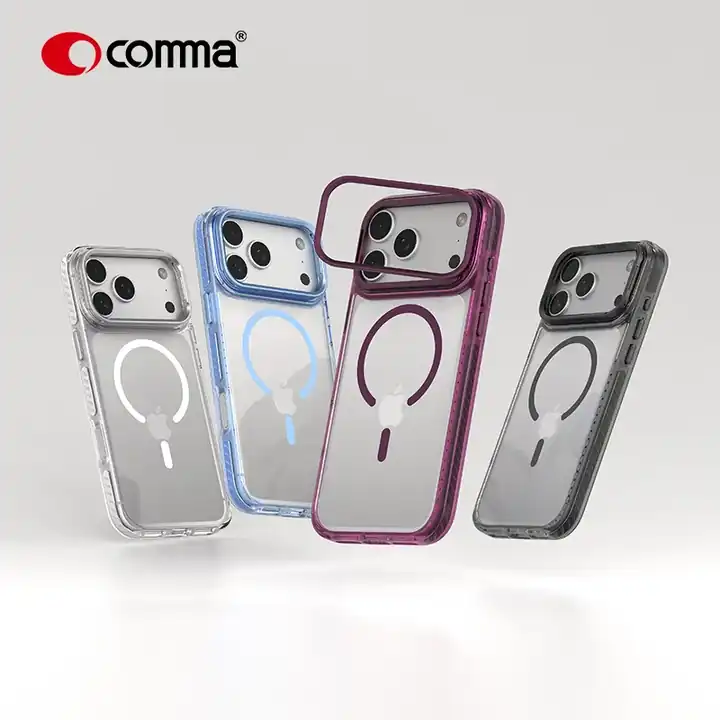
No More Naked iPhones: Hands-On Review of the comma Case, Screen Protector & Charger Trio
Variable Aperture Camera Accessories: comma’s Lens Protection Solution for the New iPhone

A20 Pro Performance Protection: Decoding comma’s Cooling and Protection Design Logic

Фильтр для монитора, защищающий от посторонних взглядов
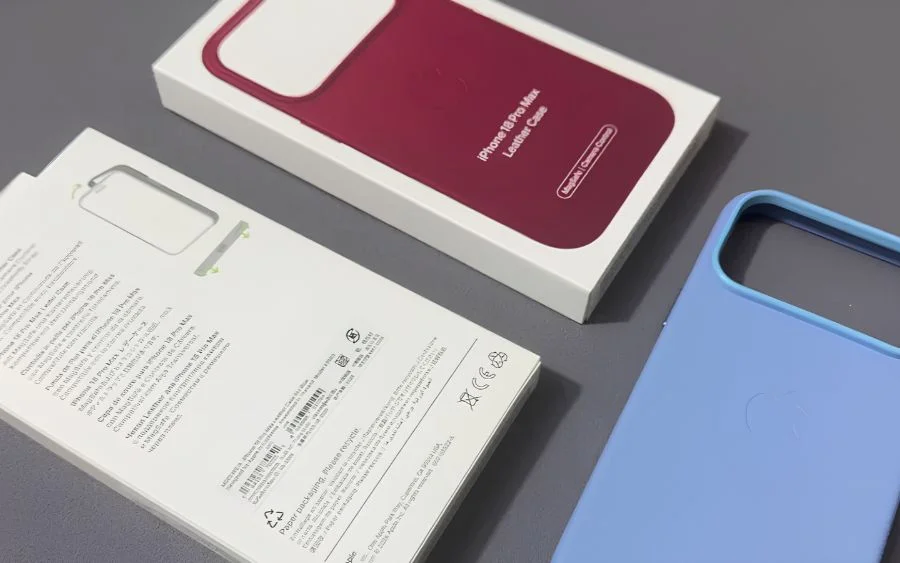
Хорошие бренды чехлов для телефонов

Фильтр конфиденциальности для компьютерного монитора
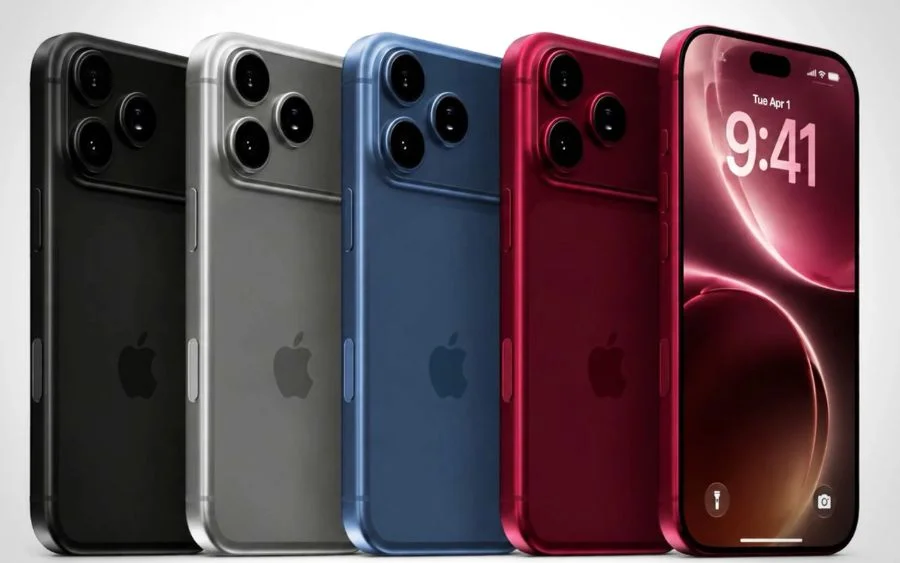
Лучшие бренды чехлов для нового iPhone 18
Почему так важно правильно выбрать чехол для этой модели телефона
Экран треснул, несмотря на наличие защитной пленки

Стремясь к высокому качеству и выполняя свою миссию, компания Comma способствует развитию реальной экономики, опираясь на мастерство.
Новый старт в 2026 году | DEVIA заключает тесное стратегическое партнерство с Huawei для совместного создания высококачественного
5 главных причин, почему дистрибьюторы переходят на автоматизированную резку пленки.